Risks and claims
Every homeowner faces a fundamental question: what could go wrong with my property, and will my insurance actually pay out when it does? The relationship between risks and claims forms the beating heart of home insurance, yet it remains one of the most misunderstood aspects of property ownership. A risk is any potential event that could damage your home or belongings—from flooding and fire to subsidence and theft. A claim is what happens when that risk becomes reality and you ask your insurer to cover the financial consequences.
Understanding this landscape isn’t just about ticking boxes on a policy document. It’s about knowing which trees threaten your foundations, why your postcode determines your premium, how insurers define a ‘storm’ versus ‘just windy weather’, and why a poorly maintained gutter could void a £10,000 claim. This knowledge transforms insurance from an abstract monthly payment into a practical shield that actually works when disaster strikes.
The stakes are considerable. The average UK home insurance claim exceeds £3,000, yet roughly one in five claims faces challenges or partial rejection due to misunderstandings about coverage, excess conditions, or maintenance obligations. This comprehensive overview connects the dots between risk assessment, prevention strategies, and successful claim outcomes across every major category of home insurance peril.
Understanding How Insurers Assess Property Risk
Insurance premiums aren’t plucked from thin air—they’re calculated using sophisticated risk models that evaluate dozens of factors specific to your property and location. Think of it as a risk profile unique to your address, constantly updated as conditions change.
Geographic location plays an enormous role. Properties in Flood Zone 3 can see premiums double compared to identical homes just streets away, even when flood defences exist. Similarly, local crime statistics create a ‘postcode lottery’ where your premium can vary by 40% based purely on burglary rates in your area. Corner plots statistically attract more opportunistic theft due to multiple access points, whilst homes near canals, culverts or coastal areas face hidden flood risks not always visible on standard maps.
Physical characteristics matter equally. Clay soil combined with large oak trees creates subsidence risk that can cost £20,000 to remediate. Terraced housing carries shared-wall fire risks where your neighbour’s electrical fault becomes your insurance claim. Properties with a documented claims history—even from previous owners—may carry a ‘high risk’ label that follows the property, not the person.
Modern insurers increasingly factor in maintenance standards and security measures. Outdated electrical systems, rewireable fuses, missing interlinked smoke alarms, or inadequate security can trigger coverage exclusions or significantly higher premiums. The most insurability-conscious buyers now commission specialist risk reports before finalising property offers, checking for Japanese knotweed, mining subsidence, tree proximity issues, and historical ground movement.
Major Perils: Fire, Flood and Structural Movement
Three categories dominate serious home insurance claims, each capable of rendering a property temporarily uninhabitable and generating five-figure repair bills.
Fire Damage and Forensic Investigation
Within the first 48 hours after a house fire, insurers launch a forensic investigation to determine cause and liability. Was it accidental, or did negligence play a role? Tumble dryer lint build-up, daisy-chained extension sockets, or lithium battery fires from e-bikes and scooters increasingly void coverage in flats where such items are stored inappropriately. The investigation examines electrical certificates (EICR), appliance maintenance records, and compliance with fire safety regulations like interlinked alarms—now legally required in some UK regions.
Flood Damage and Recovery
Flooding claims take significantly longer to settle than fire claims because properties must be thoroughly dried before restoration begins. Rushing this process causes secondary rot and structural issues that compound the original damage. The Flood Re scheme helps high-risk properties access affordable insurance, but coverage often excludes gradual seepage, sewage back-up (sometimes classed as accidental damage rather than flood), and the distinction matters enormously for claim approval.
Subsidence, Heave and Ground Movement
Removing a large tree can trigger heave—the opposite of subsidence—as clay soil rehydrates and expands, potentially causing more destruction than the original sinking. Standard policies typically cover subsidence but may exclude ground movement from coastal erosion, fracking-induced earthquakes, or coal mining subsidence requiring specialist coverage. Buying a property with historical movement remains possible but requires specialist insurers and higher premiums.
Water Damage: The Most Common Insurance Claim
Escape of water represents the number one UK home insurance claim by volume, yet many homeowners don’t fully understand what’s covered and what isn’t.
The classic scenario—a burst pipe, failed washing machine connection, or upstairs bathroom leak flooding your kitchen—is typically covered. However, the ‘slow leak exclusion’ trips up countless claimants. Gradual seepage from failed grout, deteriorating seals, or minor plumbing weeps is classified as ‘lack of maintenance’ rather than sudden accidental damage. The difference between a £5,000 payout and zero often hinges on whether the leak was sudden and unforeseen.
Smart water valves costing around £200 can automatically shut off your water supply when abnormal flow is detected, potentially preventing a £5,000+ claim. Many insurers now offer premium discounts for installing these devices. Equally important is adequate ‘trace and access’ cover—at least £5,000—to pay for removing floors, walls or ceilings to locate hidden leaks without which repair is impossible.
Liability for multi-occupancy buildings creates particular complexity. When an upstairs flat floods your kitchen, who pays? Generally, the upstairs owner’s insurance covers damage to your property, but proving negligence versus accidental damage affects excess payments and claim timelines. Sewage back-up occupies a grey area between flood and accidental damage, requiring careful policy reading to confirm coverage.
Storm and Weather-Related Claims
Not all windy weather qualifies as a ‘storm’ for insurance purposes. Most policies define a storm using specific criteria: wind speeds typically exceeding 55mph, often accompanied by heavy rain, hail or snow. Insurers routinely check meteorological records before approving roof damage claims, and if local wind speeds didn’t reach the threshold, your claim for blown-off tiles may be rejected regardless of visible damage.
The ‘wear and tear clause’ causes significant claim frustrations. Even during a genuine storm, insurers can decline claims if poor maintenance contributed to the damage. Roof felt older than 10 years, deteriorated pointing, or missing tiles that existed before the storm event all provide grounds for rejection or reduced settlement.
Coverage for garden items during storms varies considerably. Trampolines and greenhouses are frequently excluded or require specific endorsement. Understanding exactly what your policy covers before storm season arrives prevents unpleasant surprises. Photographing damage safely—without climbing onto roofs or taking unnecessary risks—provides crucial evidence, but timing matters: document damage immediately while conditions clearly show storm impact, yet wait for professional assessment before making temporary repairs that might affect the claim investigation.
Assessing Risk Before You Buy a Property
The most cost-effective time to address insurance risks is before you exchange contracts. Several tools and reports help identify potential insurability issues that could haunt you for decades.
Environment Agency flood maps provide the starting point for assessing water risk, but they’re not infallible. Properties near canals, culverts, or in valleys may face localised flood risks not captured by main river mapping. Requesting a detailed flood search report costs around £50 but could save you from buying an uninsurable property.
The Japanese knotweed nightmare makes properties genuinely difficult to insure and mortgage when present within seven metres of structures. The 5-metre rule for large trees like willows causes similar insurer panic due to subsidence risk on clay soils. A homebuyer’s environmental risk report highlights these issues alongside historical land use, radon levels, and ground stability concerns.
Coal mining reports are essential in former mining areas where subsidence risk remains active. Standard insurance excludes mining subsidence, requiring separate coverage through the Coal Authority’s scheme. Similarly, properties with documented structural movement, historic flooding, or previous major claims may require specialist insurers—information best discovered during surveys rather than after purchase when you’re locked into the property.
Electrical and Fire Safety Risks
Electrical faults cause approximately 20,000 UK house fires annually, making electrical safety a cornerstone of home insurance risk assessment.
Properties built in the 1930s or earlier often retain original wiring that insurers consider uninsurable without an EICR certificate (Electrical Installation Condition Report) confirming safety. Rewireable fuses—the old-style wire fuses that homeowners could replace themselves—are particular red flags for insurers who strongly prefer modern circuit breakers that trip automatically.
Modern fire risks increasingly involve lithium batteries. E-bikes and e-scooters stored in flats, especially when charging overnight, have caused devastating fires that spread rapidly. Several insurers now explicitly exclude or limit coverage for these items unless stored in approved locations. The lint filter danger in tumble dryers remains the leading cause of appliance fires—cleaning the filter after every load isn’t just good practice, it’s essential for maintaining valid insurance coverage.
Daisy-chaining multiple extension leads creates overload risks that insurers classify as negligence. If an electrical fire originates from overloaded sockets, claims can be reduced or rejected entirely. Conversely, installing interlinked smoke alarms—which trigger simultaneously throughout the property when one detects smoke—now represents the legal standard in Scotland and new-build properties across the UK, with insurers viewing their absence as a significant risk factor.
Liability Risks on Your Property
Home insurance isn’t just about damage to your property—it also protects you from liability claims when visitors are injured on your premises.
The Occupiers’ Liability Act creates legal responsibility for maintaining reasonably safe conditions for anyone lawfully on your property, including delivery drivers, tradespeople, and social guests. Loose rugs and stair carpets represent the number one cause of domestic injury claims, whilst rotting decking has resulted in compensation awards exceeding £50,000 when serious injuries occur.
Motion sensor lights significantly reduce liability risk by improving visibility along paths and steps. Conversely, poor lighting creates grounds for successful injury claims against homeowners. The question of whether homeowners must warn tradespeople of specific risks (the ‘wet floor sign’ principle) depends on whether hazards are obvious to professionals versus hidden dangers only the homeowner knows about.
Trampolines generate particular liability anxiety: if a neighbour’s child is injured while playing on your trampoline, you may face claims under your home insurance liability coverage. Prevention involves clear boundaries about supervised use, but ultimately your policy’s public liability section (typically £2 million minimum) provides the financial protection. Ensuring adequate liability limits and understanding your duties of care prevents devastating personal financial exposure.
Security, Theft and Burglary Prevention
Theft claims hinge not only on what was stolen, but on whether you met your policy’s security requirements and took reasonable precautions.
The ‘shop window effect’—leaving keys visible from the letterbox or near the front door—constitutes negligence that can void theft claims entirely. Similarly, posting holiday photos on social media while you’re away (the ‘check-in risk’) provides insurers grounds to argue you advertised your absence, reducing or eliminating coverage.
Physical security focuses on weak points: side gates and trellis that 70% of burglars exploit to access rear properties unobserved. Corner plots face elevated theft risk due to multiple approach angles and reduced natural surveillance. Visual deterrents like CCTV cameras help, but fake cameras might actually void your insurance policy if insurers believe you misrepresented your security measures when obtaining coverage.
Forensic marking systems like SmartWater and UV pens demonstrably deter thieves by making stolen goods traceable, with some insurers offering premium reductions for verified installations. Smart plugs versus mechanical timers both simulate occupancy through lighting patterns, with mechanical timers sometimes judged more convincing due to their unpredictability. The key is ensuring your security measures match what you declared when obtaining insurance—misrepresentation causes more claim rejections than the security measures themselves.
Vandalism and Malicious Damage
Vandalism claims operate under different rules than burglary, often carrying higher excess payments and stricter evidence requirements.
The critical 48-hour rule requires boarding up broken windows or securing the property immediately after vandalism to prevent further weather damage or opportunistic entry. Failing to do so allows insurers to argue that subsequent damage resulted from your negligence rather than the original vandalism event.
Obtaining a crime reference number is essential even for minor vandalism like graffiti or smashed plant pots. Without police documentation, insurers may suspect fraudulent claims or refuse coverage entirely. The crime reference number doesn’t mean police will investigate, but it provides independent verification that you reported the incident promptly.
Graffiti removal occupies a grey area between insurance coverage and maintenance. Some policies include vandalism cleanup whilst others exclude it as cosmetic damage. Garden items like ornamental pots and statues are typically covered for vandalism only if specifically listed or if your contents cover extends to gardens, which isn’t universal.
Proactive security measures like anti-climb paint and Prikka strips (anti-climb spikes) are legal but require proper warning signage. Failure to display required warnings can transform your security measure into a liability issue if someone is injured, even during an attempted burglary. Understanding the legal framework protects both your property and your insurance coverage.
When Risks Make Properties Hard to Insure
Certain risk factors push properties into the specialist insurance market, where coverage remains available but at significantly higher premiums.
The Flood Re scheme exists specifically to help properties in high-risk flood zones access affordable insurance, but it’s not automatic—you must specifically request Flood Re pricing, and not all insurers participate. Properties built after certain dates may be excluded from the scheme, forcing owners into the standard market where premiums can be prohibitive.
Coastal erosion represents one of the few genuinely uninsurable risks. Standard policies explicitly exclude damage from the sea progressively taking your garden or undermining foundations. Properties within defined erosion risk zones lose value dramatically and may become unmortgageable as the threat intensifies.
Fracking-induced earthquakes occupy uncertain territory. Standard ground movement coverage typically excludes mining and drilling activities, but the precise wording varies. Properties in active or former extraction areas should verify coverage explicitly. Similarly, homes with Japanese knotweed within treatment range, active subsidence, or multiple flood claims may require specialist brokers to find coverage, often with specific exclusions or risk-sharing arrangements that make future claims more complex.
The claims history database means that even if you’ve never claimed, purchasing a property with multiple previous claims can burden you with a ‘high risk’ label. Pre-purchase disclosure helps avoid inheriting insurability problems, making thorough due diligence before buying as important as the survey itself.
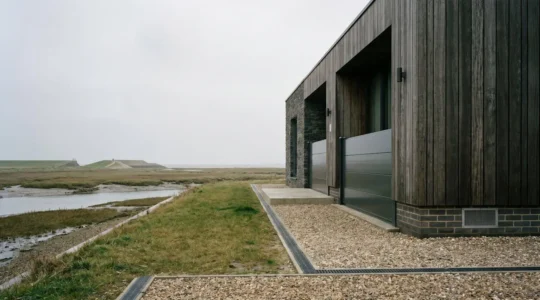
Flood Re Scheme: How to Get Affordable Insurance in a High-Risk Zone?
Finding affordable insurance isn’t just about checking a flood map; it’s about uncovering the hidden geological and man-made risks that standard insurers are programmed to avoid. Standard policies use broad ‘ground movement’ exclusions to avoid claims from subsidence, coastal erosion,…
Lire la suite
Vandalism vs Burglary: Why Your Excess Might Be Higher for Malicious Damage?
The success of your vandalism claim isn’t about *if* you are covered, but *how* you prove the loss and prevent it from getting worse. A crime reference number isn’t just paperwork; it’s the third-party validation that moves your claim from…
Lire la suite
Visual Deterrents: Why Fake Cameras Might Void Your Insurance Policy?
Contrary to the ‘better than nothing’ belief, relying on fake cameras can actively jeopardise your home insurance claim by demonstrating a failure to take ‘reasonable care’. Insurers view dummy devices not as a deterrent, but as evidence of negligence, a…
Lire la suite
Occupiers’ Liability Act: Are You Liable if a Delivery Driver Trips on Your Path?
A simple trip on your property can escalate into a complex legal claim; understanding the principle of « reasonable care » is your best defence. Your legal duty varies significantly depending on the visitor, with different expectations for children compared to professional…
Lire la suite
EICR Certificates and Old Wiring: Is Your 1930s Home Electrically Insurable?
The uncomfortable truth is that your 1930s home’s original wiring doesn’t just pose a fire risk; it could make your home insurance policy worthless when you need it most. Insurers increasingly scrutinise ‘modern perils’ like e-bike charging and tumble dryers,…
Lire la suite
Escape of Water: Why the UK’s #1 Claim is a System Failure, Not an Accident
Contrary to popular belief, most water damage claims aren’t caused by sudden, unpredictable accidents but by foreseeable plumbing system failures that can be engineered against. Gradual damage from « wear and tear, » like failing grout, is often excluded from policies because…
Lire la suite
The Homebuyer’s Risk Report: How to Spot Uninsurable Issues Before You Buy?
Buying a property cheaply often means inheriting hidden risks, but many « uninsurable » issues are actually quantifiable and manageable with the right data. Official data from the Environment Agency and crime statistics can reveal risks insurers see but buyers miss. Specific…
Lire la suite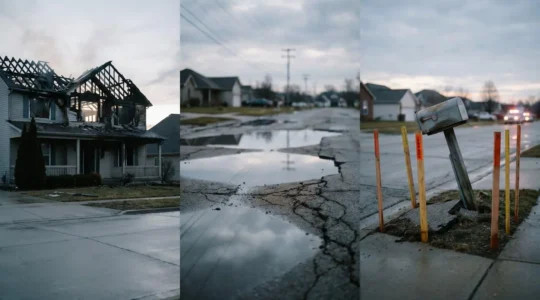
Fire, Flood, and Heave: How to Survive the Financial Shock of a Major Peril
Surviving a major home disaster isn’t about luck; it’s about understanding the hidden operational playbook that insurers and restorers use, allowing you to manage the process instead of being managed by it. The first 48 hours are a forensic window…
Lire la suite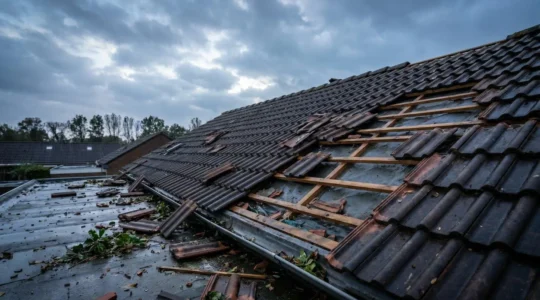
Storm Ciara or Just Windy? How Insurers Define a ‘Storm’ to Reject Claims
A storm damage claim isn’t won by arguing about the weather; it’s won by presenting better data than your insurer, forcing them to acknowledge the specific, localised event that damaged your home. Insurers rely on broad, regional meteorological models and…
Lire la suite
Flood, Subsidence, or Theft: Which Risk Event Is Most Likely in Your Postcode?
The greatest risk to a homebuyer isn’t the most dramatic event, but the one you fail to quantify; uninsurable properties are defined by specific, often overlooked, data points that insurers use to calculate liability. A property’s build date, its position…
Lire la suite