Claims and procedures
When disaster strikes your home—whether through fire, flood, storm damage or theft—the insurance claim process can feel overwhelming. The difference between a smooth settlement and a protracted dispute often comes down to understanding how insurers assess damage, what evidence they require, and which procedural steps truly matter.
This resource breaks down the essential elements of claims and procedures into practical knowledge you can use. From understanding why your insurer values your damaged sofa differently than you do, to knowing which phone call to make first at 2 AM when a pipe bursts, these fundamentals determine whether you receive fair compensation or face unexpected shortfalls.
The claims journey involves distinct phases: immediate response and notification, evidence gathering, professional assessment, repair management, and settlement. Each phase has specific requirements and common pitfalls that can reduce your payout or delay resolution by months.
Understanding How Insurers Value Your Claim
The valuation method written into your policy fundamentally determines what you’ll receive after a loss. Many policyholders discover this crucial detail only after filing a claim, when the settlement offer arrives significantly below expectations.
New for Old vs Indemnity Settlement
Replacement cost (often called « new for old ») pays the current cost of buying a brand-new equivalent item, regardless of the age of your damaged possession. Indemnity settlement deducts wear and tear based on the item’s age and condition, leaving you with its depreciated value. The difference can be thousands of pounds on a single claim.
Insurers typically apply the heaviest wear and tear deductions to clothing, soft furnishings and electronics. A five-year-old sofa might receive only 40% of its replacement value under indemnity terms, whereas the same policy with replacement cost cover would pay the full price of a comparable new sofa.
The Betterment Dilemma
When repairs necessarily improve your property beyond its pre-loss condition, insurers may reduce payment to account for betterment. Installing a new kitchen to replace a 15-year-old one involves betterment; you’re receiving new cabinets, appliances and worktops where worn equivalents existed before.
This principle explains why antiques and vintage items create valuation challenges. You cannot apply « new for old » to a Victorian wardrobe—there is no new equivalent. Specialist agreed-value endorsements or separate valuations become necessary for irreplaceable possessions.
The Average Clause Trap
If you’ve underestimated your total contents value or rebuild cost, the average clause reduces every claim proportionally. Insure for £40,000 when your contents are actually worth £50,000 (20% underinsured), and the insurer will reduce your claim by 20%—even on a small individual loss. A £10,000 theft claim becomes £8,000.
This proportional reduction applies regardless of the claim size, making accurate valuation essential when purchasing cover, not just when claiming.
Calculating Your True Rebuild Cost
Your home’s market value bears no relationship to its rebuild cost—the amount required to demolish, clear the site and reconstruct the property to its current specification. Properties in expensive neighborhoods often have relatively modest rebuild costs, while characterful homes in affordable areas may be extremely expensive to reconstruct.
Hidden Costs That Consume Your Sum Insured
The sum insured must cover far more than construction labor and materials. Professional fees for architects, structural engineers and surveyors typically add 10-15% to the total cost. Demolition and debris removal can consume another significant portion, particularly after fire damage when hazardous material removal is required.
Local authority fees, temporary support structures, and the cost of matching existing materials all draw from the same sum insured. Underestimate the total by 30%, and you’ll face that shortfall personally when rebuilding.
Why Standard Calculators Fail for Unique Properties
Online rebuild cost calculators provide reasonable estimates for standard construction homes. They perform poorly for properties with distinctive features: stone construction, listed building elements, bespoke joinery, or traditional building methods requiring specialist craftspeople.
Period properties, homes in conservation areas, and buildings constructed from local materials that are difficult to source all carry rebuild costs that exceed standard calculations. Professional surveyor assessments become worthwhile when your property falls outside typical specifications.
First Response: What to Do When Damage Occurs
The first few hours after discovering damage establish the foundation for your entire claim. Decisions made under stress during this period can inadvertently breach policy conditions or create evidence problems that haunt the claim for months.
Emergency Repairs and Your Duty to Mitigate
Insurance policies require you to prevent further damage—your duty to mitigate. When a pipe bursts at midnight, you cannot simply wait until morning to contact the insurer; you must take reasonable steps to stop water flowing and protect undamaged areas.
« Make safe » repairs that prevent additional loss are generally covered: emergency plumber call-outs, temporary boarding of broken windows, or hiring industrial dehumidifiers. The key qualifier is « reasonable »—spending £500 on emergency repairs to prevent £5,000 in additional damage is expected; spending £5,000 without insurer authorization when £500 would suffice may not be reimbursed.
Notifying Your Insurer Correctly
The words you use during the first call matter more than most policyholders realize. Describing roof damage as « weather damage » versus « storm damage » can determine whether the claim is accepted or declined. Insurers define storm specifically—usually requiring wind speeds above certain thresholds—while « weather » is ordinary and excluded.
Policy terms typically require notification within a specific timeframe, often 30 days but sometimes as short as 7 days for certain perils. Late notification can void cover entirely, even for otherwise valid claims. Never assume you can « wait and see » whether to claim.
What Not to Say
Casual apologies to neighbors after accidental damage can be interpreted as admissions of liability that void your liability cover. « I’m so sorry about your ceiling » becomes evidence against you. Express sympathy without accepting fault: « This is terrible » rather than « I should have checked those pipes. »
Similarly, speculating about causes before investigation can create inconsistencies that insurers exploit to deny claims. State facts—what you observed and when—not theories about what might have caused the damage.
Building an Evidence File That Guarantees Payment
Insurance claims are ultimately evidence-based negotiations. The quality and completeness of your documentation determines whether disputed items are paid or declined.
The Digital Home Inventory
Creating a comprehensive record before any loss occurs transforms the claims process. A room-by-room video walkthrough, opened drawers and cupboards visible, provides irrefutable proof of possessions. Cloud storage ensures this evidence survives even total property loss.
For valuable items, photographs showing serial numbers, condition, and context prove both ownership and quality. Purchase receipts stored digitally create an unassailable paper trail. Thermal paper receipts fade within months; scanning them preserves evidence indefinitely.
Documenting Damage Immediately
Photograph damage from multiple angles before any cleanup or temporary repairs. Capture wide shots showing context and close-ups revealing detail. For water damage, photograph ceiling stains, buckled floors and damaged possessions before removing them.
Keep damaged items until the insurer inspects them. Discarding the destroyed carpet before the loss adjuster arrives eliminates critical evidence about damage extent and causation. Store items safely, but retain them.
The Incident Diary
A contemporaneous record of events, times, weather conditions, and your actions provides powerful evidence. Note when you discovered damage, what emergency steps you took, and whom you contacted. Record the names of insurer representatives you speak with and the substance of each conversation.
This diary becomes invaluable if the claim is disputed months later, when memories have faded but documentary evidence remains clear.
Working with Loss Adjusters and Specialists
The loss adjuster visits your property on behalf of the insurer to assess damage and investigate the claim. Understanding their role—and the alternative of hiring your own representative—shapes the dynamic of professional assessment.
Loss Adjuster vs Loss Assessor
The insurer’s loss adjuster works for the insurance company. A loss assessor works for you, preparing your claim and negotiating on your behalf, typically for a percentage of the settlement (often 10% on a « no win, no fee » basis).
For straightforward claims, the cost of a loss assessor may not be justified. For complex claims involving significant sums, disputed valuations, or partial claim denials, professional representation often increases the settlement enough to exceed the fee.
Specialist Evidence: When You Need Professional Reports
Certain claims require technical evidence beyond photographic documentation. Proving that tree roots caused subsidence may require specialist root DNA analysis. Demonstrating that a drain collapse resulted from sudden damage rather than gradual deterioration might need drain camera evidence and structural engineer assessment.
Thermal imaging cameras detect hidden damp without destructive testing, while lightning strike reports from meteorological databases prove surge damage claims. The cost of specialist reports is often recoverable as part of the claim when they’re reasonably necessary to establish the loss.
Managing Repairs and Settlement Options
Once liability is accepted and the loss quantified, you face choices about how repairs proceed and how settlement is structured. These decisions involve trade-offs between convenience, control and value.
Insurer’s Approved Contractor vs Your Own Builder
Insurers often prefer using their approved contractors, offering guaranteed repairs and streamlined processes. You generally retain the right to obtain your own estimates, though insurers need only pay reasonable costs based on their approved contractor rates.
Obtaining three independent quotes provides leverage if the insurer’s assessment seems low. The challenge comes when the approved contractor produces poor work—you’re entitled to proper repairs meeting acceptable standards, and « snagging » defects must be corrected.
Cash Settlement vs Reinstatement
Taking a cash settlement instead of repairs gives you control but includes a significant catch: VAT. If the insurer arranges repairs, they pay trade prices including recoverable VAT. Cash settlements to policyholders often exclude VAT unless you provide VAT invoices, reducing the settlement by 20%.
Cash settlements make sense when you intend to manage repairs personally, want to upgrade during restoration, or are selling the property. They’re problematic if the settlement is marginal and the VAT exclusion creates a shortfall.
Interim Payments and Cash Flow
Major restoration projects create cash flow challenges when contractors require payment before the claim settles. Interim payments release partial settlement as work progresses, allowing you to pay contractors without funding the entire project personally.
Request interim payments early in the process, particularly for emergency works, alternative accommodation, and initial contractor deposits. Insurers should not unreasonably delay payment for uncontested portions of the claim.
Dispute Resolution and Your Rights
When claims are declined, undervalued, or unreasonably delayed, formal complaint procedures and external dispute resolution provide recourse beyond accepting the insurer’s decision.
The Internal Complaint Process
Insurers must operate formal complaint procedures with defined response timeframes. Clearly state that you’re making a formal complaint (not just expressing dissatisfaction) and specify what resolution you’re seeking: claim acceptance, increased valuation, or compensation for poor service.
The insurer must provide a final response within eight weeks. This « deadlock letter » enables you to escalate the dispute to external resolution while the internal process continues.
Financial Ombudsman Service
The Financial Ombudsman Service (FOS) provides free, independent dispute resolution for consumers. You can refer complaints after receiving the insurer’s final response or if eight weeks have passed without resolution.
The Ombudsman can award compensation for financial loss and distress/inconvenience (typically £50-£500 for service failures, occasionally higher for serious cases). Their decisions are binding on insurers but not on you—if you reject their determination, you retain the right to pursue legal action.
Distress and Inconvenience Awards
Beyond the claim value itself, poor service can justify compensation: repeated missed appointments, unreturned calls, unreasonable delays, or failure to follow their own procedures. Document every service failure with dates, times and the impact on you.
Additional remedies include statutory interest (currently 8% per year) on late payments when the insurer has unreasonably delayed settlement of an accepted claim, and reimbursement of costs incurred calling premium-rate customer service numbers during the claim.
Understanding claims procedures empowers you to navigate the process confidently, from that first emergency call through to final settlement. The difference between policyholders who receive full, fair compensation and those who don’t often comes down to knowing which steps matter, what evidence is essential, and when to escalate disputes through proper channels.
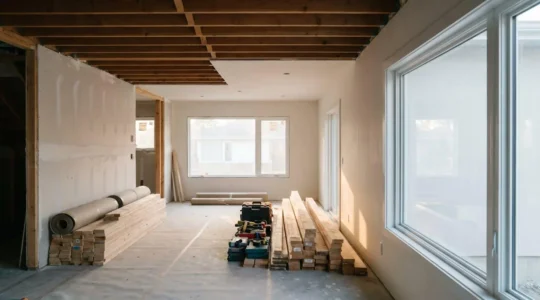
The Schedule of Works: How to Manage the Chaos of a Major Home Restoration
The key to surviving a major home restoration isn’t patience; it’s project management. You can actively control cash flow to builders, enforce technical quality standards, and negotiate your living situation. Every document you sign and every milestone you approve is…
Lire la suite
Structural Engineers and Leak Detection: When Do You Need a Specialist Report?
An insurer rejecting a claim based on « wear and tear » is not a final verdict; it’s an opening argument that a specialist report is designed to dismantle. Forensic reports use objective data (CCTV, thermal imaging, DNA) to prove a specific,…
Lire la suite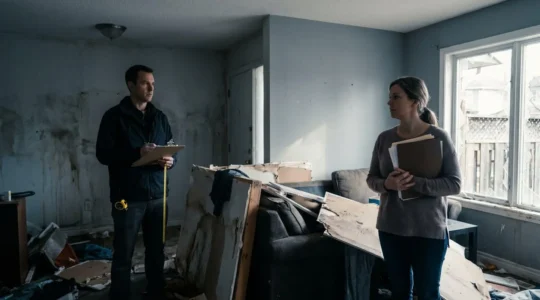
Loss Adjuster vs Loss Assessor: Who Is Actually on Your Side?
In the wake of property damage, the Loss Adjuster sent by your insurer is not a neutral expert; they are a professional paid to protect the insurer’s financial interests. A Loss Adjuster’s primary role is to assess the validity of…
Lire la suite
Distress and Inconvenience: How to Claim Compensation for Poor Service?
In summary: Your insurer’s poor service has caused you stress, wasted time, and frustration; this is known as « distress and inconvenience » and is a valid basis for a compensation claim. Simply complaining is not enough. The key is to build…
Lire la suite
The Scene of the Crime: How to Photograph Damage for an Airtight Insurance Claim
To win an insurance claim, you must think like a forensic investigator, not a victim. Simply taking photos of damage is not enough; you must build a comprehensive case file that anticipates and neutralizes an insurer’s potential objections. Every piece…
Lire la suite
The Digital Inventory: Catalogue Your Home in 1 Hour and Maximise Your Insurance Payout
Creating a claim-ready home inventory isn’t a week-long project; it’s a one-hour strategic task of building a ‘proof package’ for your insurer. Video walkthroughs and cloud-stored scans are more powerful proof than memory and fading receipts. For high-value items, detailed…
Lire la suite
Cash Settlement vs. Reinstatement: A Negotiator’s Guide to Taking Control of Your Claim
Taking a cash settlement can give you control, but insurers count on you not understanding the hidden costs like VAT and betterment deductions that reduce your payout. Your initial offer is a starting point, not a final number; it almost…
Lire la suite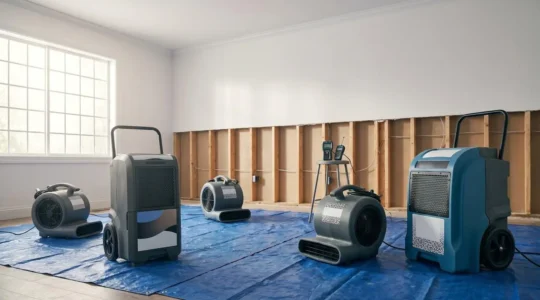
Drying Out vs Stripping Out: Avoiding Unnecessary Demolition After a Flood?
After a flood, your biggest risk isn’t just mold; it’s losing control of the repair process to contractors who may not have your best interests at heart. The insurer’s builder is often paid to control costs for the insurance company,…
Lire la suite
Crime Reference Numbers: Why You Cannot Claim for Theft Without Police Validation
Filing an insurance claim after a theft or damage can be overwhelming, but one step is more critical than any other: obtaining an official police report. A Crime Reference Number (CRN) acts as the official, third-party validation that an incident…
Lire la suite
The First Call: What to Say (and Not Say) When Notifying Your Insurer of a Claim?
In a crisis, your first call to an insurer is not a simple report; it is the opening move of a financial negotiation where your words have immense power. Your policy has strict, non-negotiable deadlines and trigger words that can…
Lire la suite