Your standard personal liability coverage is not a blanket safety net; it’s a rulebook with critical exclusions for modern life, from e-scooters to social media.
- Most policies cover accidental negligence worldwide but specifically exclude anything involving registered motor vehicles, business activities, and intentional harm.
- Coverage for new risks like drones, e-bikes, and online defamation often requires special policy endorsements that are rarely included by default.
Recommendation: Stop thinking about ‘if’ you are covered and start thinking like an underwriter about ‘how’ you are covered. Assess your personal activities against the core principles of negligence, intent, and motor vehicle exclusions to identify your true financial exposure.
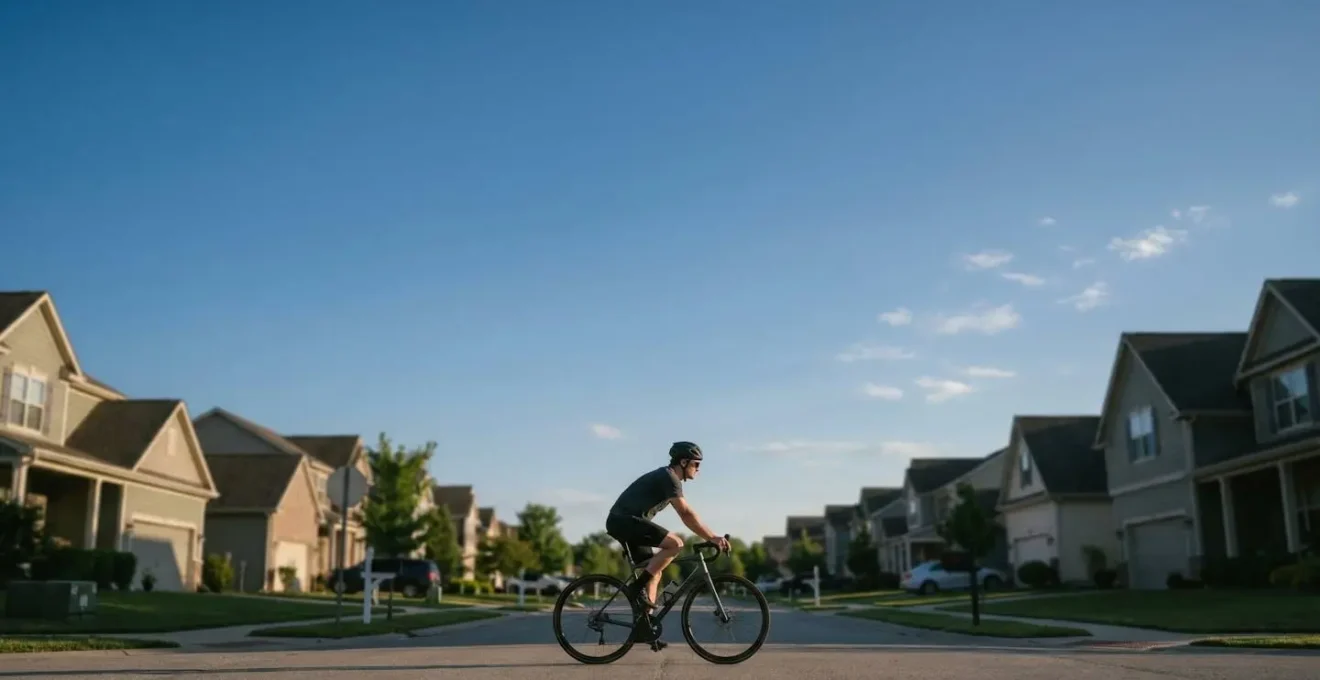
As a commuter cyclist, you’ve likely had the thought: what happens if I accidentally hit a pedestrian? It’s a valid concern, and most people assume their homeowners or renters insurance would cover such an incident under its personal liability clause. They believe this coverage is a broad shield against life’s mishaps. From my desk as a personal liability underwriter, I can tell you this belief is both comforting and dangerously incomplete.
The world of liability has expanded far beyond the classic examples of a dog bite or a visitor slipping on a wet floor. We now live in an era of personal drones, high-speed mobility scooters, and global social media platforms where a single tweet can lead to a lawsuit. The question is no longer just about your bike commute; it’s about whether your insurance policy, drafted with old-world risks in mind, has kept pace with your 21st-century life.
But what if the key to understanding your coverage wasn’t in memorizing a list of covered incidents, but in learning to think like the underwriter who wrote the policy? The real determinant of coverage isn’t the specific event, but the principles behind it: negligence versus intentional harm, personal activity versus business use, and the all-important ‘motor vehicle exclusion’.
This article will decode that logic. We will move beyond the cycling scenario and explore a series of modern, real-world liability questions. By examining these diverse situations, you will learn the fundamental underwriting rules that decide whether a mishap becomes a covered claim or a personal financial catastrophe.
Here, we will dissect the common and not-so-common scenarios that test the limits of a standard liability policy. From a child’s destructive tantrum to the legal fallout of a drone flight, this overview will equip you to see your own risks through the critical eye of an insurer.
Summary: Beyond the Bike Crash: Is Your Personal Liability Coverage Ready for the Real World?
- The Supermarket Tantrum: Liability if Your Child Destroys Store Displays?
- Does Your Liability Cover Extend to Holidays in Europe or Worldwide?
- Flying Drones in Parks: The Height and Distance Rules That Void Liability Cover?
- Mobility Scooters: Do You Need Separate Insurance for Road Use?
- Defamation and Liability: Does Insurance Cover You if You Are Sued for a Tweet?
- If Your Child Scratches a Ferrari with Their Bike, Are You Covered?
- Does Renters Insurance Cover Your Bike if Stolen from the Communal Hallway?
- The Dog, The Drone, and The Bike: When Does Family Liability Protection Kick In?
The Supermarket Tantrum: Liability if Your Child Destroys Store Displays?
This scenario cuts to a core underwriting principle: the distinction between a negligent act and an intentional one. When a child, especially a young one, causes damage, the question of legal responsibility becomes complex. Most parental liability laws and insurance policies hinge on the child’s age and ability to form intent. An accidental, clumsy knock-over by a toddler is a classic example of negligence, which is typically covered. The child did not mean to cause the damage.
However, if an older child willfully and knowingly destroys property in a fit of rage, the act can be classified as intentional. Personal liability policies almost universally exclude coverage for intentional or malicious acts. As legal experts note, this is a critical distinction. As they state, « Policies and exclusions vary by state, but typically, most homeowners insurance will cover the acts of children under a certain age (such as 11, 12 or 13) and only for acts of negligence, not intentional acts. »
Furthermore, many jurisdictions have laws holding parents financially responsible for their children’s actions, but often with limits. For example, some state parental responsibility laws establish specific financial caps, such as $25,000 for property damage in California. If the damage from the tantrum—say, to a display of expensive electronics—exceeds this statutory limit and your policy’s coverage limit, you could be personally liable for the difference. The takeaway is that while your policy offers a shield, it’s not absolute when it comes to the actions of your children.
Does Your Liability Cover Extend to Holidays in Europe or Worldwide?
This is an area where homeowners and renters insurance provides a surprisingly robust benefit. From an underwriting standpoint, personal liability is tied to the individual, not just the insured property. Therefore, most standard policies provide worldwide liability coverage. This means if you are on holiday in Paris and accidentally knock over an expensive vase in a boutique, or on a golf course in Scotland and your stray ball injures another player, your policy’s liability protection travels with you.
As you can see, the protection is designed for personal actions in everyday life, no matter the location. However, this global shield has one giant, critically important hole: the motor vehicle exclusion. This clause is a cornerstone of liability insurance. It states that the policy will not cover any liability arising from the ownership, maintenance, or use of any type of motor vehicle. This is because vehicles require their own specific insurance policies. While you’re covered for breaking the vase, your policy will not cover you if you rent a car, moped, or even a jet ski and cause an accident. That liability requires a separate rental or travel insurance policy specifically designed for vehicle use.
Flying Drones in Parks: The Height and Distance Rules That Void Liability Cover?
Drones represent a new frontier of personal liability, and insurers approach them with caution. Coverage for drone-related incidents hinges on two main factors: the nature of the flight (recreational vs. commercial) and the pilot’s adherence to the law. Standard personal liability policies will only ever consider covering drones used for strictly recreational purposes. Any commercial use, such as for real estate photography or a paid event, is a business activity and is always excluded, requiring a separate commercial drone policy.
For recreational use, the expectation is that the operator acts with « reasonable care. » In the world of aviation, « reasonable care » is not a vague concept; it’s explicitly defined by regulations from bodies like the Federal Aviation Administration (FAA). Violating these rules is a clear-cut case of negligence from an underwriter’s perspective. If you cause an accident while breaking the law, your insurer has strong grounds to deny the claim. Key rules that impact coverage include:
- Flying under 400 feet altitude at all times
- Keeping the aircraft in your visual line-of-sight
- Flying only during daylight hours
- Not flying in a careless or reckless manner
- Yielding the right-of-way to all manned aircraft
If your drone crashes into a person or property because you were flying at night, out of your line of sight, or over the 400-foot ceiling, you weren’t just having bad luck; you were operating negligently. The policy is there to cover unforeseen accidents during responsible use, not to subsidize illegal or reckless behavior.
Mobility Scooters: Do You Need Separate Insurance for Road Use?
This question brings us back to the most important exclusion in personal liability: the motor vehicle exclusion. The defining question for an underwriter is not « Is it a scooter? » but « Is it legally considered a motor vehicle? » A device that is « subject to motor vehicle registration » is automatically excluded from a homeowners or renters policy. This is where the lines get blurry with the proliferation of e-bikes, e-scooters, and mobility devices.
Generally, low-power devices designed to assist with a disability and used primarily on sidewalks (like a standard Class 2 mobility scooter) are not considered motor vehicles and would likely be covered for liability. However, as these devices become faster and more ‘road-worthy’, their classification changes. A high-speed mobility scooter designed for road use might require registration in your state, which would trigger the exclusion and leave you without coverage. The same logic applies to high-speed e-scooters and powerful e-bikes. This is why it’s critical to know your local laws and the specifications of your device.
As this comparative analysis of personal mobility devices demonstrates, the coverage status is directly linked to factors like speed, motor power, and registration requirements.
| Device Type | Typical Coverage Status | Key Exclusion Factors | Registration Required |
|---|---|---|---|
| Standard Bicycle | Covered under homeowners/renters liability | None – typically covered | No |
| E-Bike (Low Speed) | Generally covered | May be excluded if motor exceeds state wattage limits | Varies by state |
| High-Speed E-Scooter | Often excluded | Speed capabilities, motor power, street-legal status | Often yes |
| Mobility Scooter (Class 2) | Usually covered | Excluded if subject to motor vehicle registration | Generally no |
| Road-Going Mobility Scooter | May be excluded | Higher speeds, road use, registration requirements | Often yes |
Defamation and Liability: Does Insurance Cover You if You Are Sued for a Tweet?
This is a critical misunderstanding for many policyholders. Your standard personal liability coverage is designed for two things: bodily injury (you hurt someone) and property damage (you break something). A defamatory tweet, libelous blog post, or slanderous comment causes neither. It causes « personal injury, » a legal term for non-physical harm to a person’s reputation, emotional state, or right to privacy.
From an underwriting perspective, this is a completely different category of risk. In fact, most policyholders don’t realize that standard liability covers bodily injury and property damage only; libel, slander, and defamation require an optional Personal Injury endorsement. This is an add-on to your policy that you must specifically request and pay for. Without it, you have zero coverage if you are sued for something you wrote or said.
This endorsement also covers other non-physical harms. As the Insurance Information Institute explains, « Your liability may also cover privacy issues—for example if your drone inadvertently takes pictures or videotapes a neighbor, and your neighbor then sues you (it will not cover any intentional invasion of privacy). » This highlights that the risk is not just about angry tweets, but about the broad category of causing harm that isn’t physical. If your online or real-world activities carry a risk of damaging someone’s reputation or privacy, this optional endorsement is not a luxury; it’s a necessity.
If Your Child Scratches a Ferrari with Their Bike, Are You Covered?
Assuming the scratch was a genuine accident—an act of negligence, not a malicious act of vandalism—the answer is yes, your personal liability coverage should respond. This is precisely what it’s for: covering your financial responsibility for unintentional property damage. However, this scenario immediately raises a different, more urgent question: how much coverage do you have?
A deep scratch on a luxury car like a Ferrari isn’t a simple touch-up job; it can easily run into tens of thousands of dollars for a flawless repair. If your liability limit is $100,000, you may be fine. But what if the bike swerves and causes a larger accident? This is where the escalating cost of liability claims becomes a serious concern for homeowners. In fact, Safeco Insurance reports that umbrella claims doubled from 2010 to 2020, with the average claim now at $500,000. This trend underscores the growing gap between standard policy limits and the potential cost of a major liability event. An umbrella policy, which provides additional liability coverage over and above your standard limits, is the direct response to this risk.
Encountering a high-value incident like this can be stressful. How you behave in the immediate aftermath can significantly impact the claims process. It is critical to follow a clear protocol to protect your legal and financial position.
Action Plan: High-Value Property Damage Incident
- Do not admit fault at the scene – remain calm and courteous.
- Exchange contact and insurance information with the other party.
- Document the incident with photos of the damage and the surrounding area, if possible.
- Immediately notify your insurance company of the incident, ideally on the same day.
- Let your insurer handle ALL communication with the car owner or their insurer from that point forward.
Does Renters Insurance Cover Your Bike if Stolen from the Communal Hallway?
This is a property question, not a liability one, but it’s governed by similar underwriting logic. Your renters (or homeowners) insurance includes personal property coverage. Like liability, this protection is generally worldwide. However, as the VIU by HUB Advisory Team notes, « Most policies cover theft outside the home, but may have lower limits for ‘off-premises’ theft. » A communal hallway is considered ‘off-premises’—it’s not part of your locked, private apartment. Your policy might have a $50,000 limit for property inside your home, but a sub-limit of only $1,000 or 10% of the total for property stolen elsewhere.
More importantly, this scenario highlights another crucial underwriting distinction: theft versus mysterious disappearance. To an insurer, ‘theft’ is a crime that requires evidence. A cut lock, a forced-open door, or security footage of the act are all evidence of theft. ‘Mysterious disappearance’, on the other hand, is when an item is simply gone with no evidence of a crime. You left your bike in the hall unlocked, and now it’s gone. Was it stolen? Or did another resident move it? Did it get mistaken for trash?
Without evidence of a crime, an insurer may classify the event as a mysterious disappearance, which is often an excluded peril in many policies. A claim with a photo of a cut cable lock is significantly stronger than one where the bike simply vanished. This is why documenting the circumstances of a loss is as important as reporting the loss itself.
Key Takeaways
- Standard liability is for negligence (accidents), not intentional acts (vandalism, assault). This is the first rule of coverage.
- The motor vehicle exclusion is absolute. If a device requires registration for road use (cars, mopeds, some e-scooters), your homeowners liability will not cover it.
- Coverage for non-physical harm like slander, libel, or defamation is not standard and requires a specific « Personal Injury » endorsement.
The Dog, The Drone, and The Bike: When Does Family Liability Protection Kick In?
After examining these specific scenarios, a unified picture of personal liability begins to form. Your policy isn’t a random collection of rules but a logical framework built on core principles. It’s designed to protect your family from the financial consequences of accidental harm—negligence—caused to others or their property. The protection kicks in when one of your covered household members, through a failure to exercise « reasonable care, » causes bodily injury or property damage.
The « family » aspect is broad, typically covering you, your spouse, and relatives living in your home. The protection activates whether the incident involves the family dog, a child’s stray baseball, or your own misstep while cycling. The limits of this protection are defined by your policy’s stated amount. According to industry standards, homeowners and renters policies generally offer three different liability coverage limits: $100,000, $300,000, and $500,000. Choosing the right limit depends on your personal assets and risk profile.
However, protection ceases the moment the act becomes intentional, commercial, or involves a registered motor vehicle. This framework allows insurers to provide broad, affordable protection for everyday accidents by clearly excluding risks that are either uninsurable (like criminal acts) or require their own specialized insurance products (like auto or commercial policies). Understanding this logic is the first and most important step in managing your real-world risk.
The next logical step is not simply to buy more insurance, but to perform a personal risk audit. Review these scenarios and principles against your own lifestyle, hobbies, and family activities to understand where your true financial exposure lies. An informed conversation with your insurance agent is far more valuable than simply hoping for the best.
Frequently Asked Questions on Personal Liability Away from Home: Are You Covered if You Injure Someone While Cycling?
Who is considered an ‘insured’ under a family homeowners policy?
Personal liability coverage extends to you and covered residents of your household. This typically includes family members living in your home, but coverage may differ for a child away at college, a foster child, or an elderly parent living in the home. Check your specific policy for definitions of ‘resident’ and ‘insured.’
Does my homeowners liability cover my dog if it bites someone?
Coverage for dog bites varies significantly by insurer. Many insurers cover dog bites as part of personal liability, while others exclude coverage entirely or limit coverage to certain breeds. Always check with your insurer about their specific dog bite policy and whether your pet’s breed is covered.
What is the difference between negligence and intentional acts in liability claims?
Negligence involves unintentional failure to exercise reasonable care (like forgetting to leash your dog or not following drone regulations). Intentional acts involve purposely causing harm or damage. Personal liability insurance covers negligence but excludes intentional or malicious acts by you or covered household members.