Many homeowners believe their responsibility ends at their property line. The reality is far more complex. UK law, under the Occupiers’ Liability Act, imposes a « common duty of care » that extends to anyone who might be affected by your property’s condition. This means liability isn’t about ownership alone, but about whether a danger was ‘foreseeable’ and if you took reasonable steps to prevent it, turning a simple maintenance issue into a significant legal risk.
The classic image of neighbourly disputes involves overgrown hedges or late-night noise. However, the most significant legal risks often arise from less obvious sources: a loose roof slate in a storm, a slowly spreading tree root, or an overflowing bath. When damage occurs, the instinctive response is often to consult insurance policies or initiate a conversation over the garden fence. While these steps are important, they address the aftermath, not the root cause of legal responsibility.
The core of property liability in the UK doesn’t rest on who owns what, but on a legal principle known as the « common duty of care. » This concept obligates property owners—or « occupiers »—to ensure their premises are reasonably safe for visitors and, by extension, do not pose a foreseeable threat to neighbouring properties. Understanding this duty is the key to shifting from a reactive mindset of dealing with damage to a proactive strategy of mitigating liability.
But what does « foreseeable » truly mean in practice? How does the law distinguish between a freak accident and negligence? This article will deconstruct your legal obligations as a property occupier. We will move beyond simple disputes to explore the legal framework that governs your responsibilities, analysing common scenarios through the lens of a property liability solicitor. By understanding these principles, you can better protect yourself, your property, and your relationships with those living next door.
To navigate these complex scenarios, we will examine the specific legal questions that arise from common property issues. The following sections break down your duty of care in situations ranging from storm damage to the legal definition of an « occupier. »
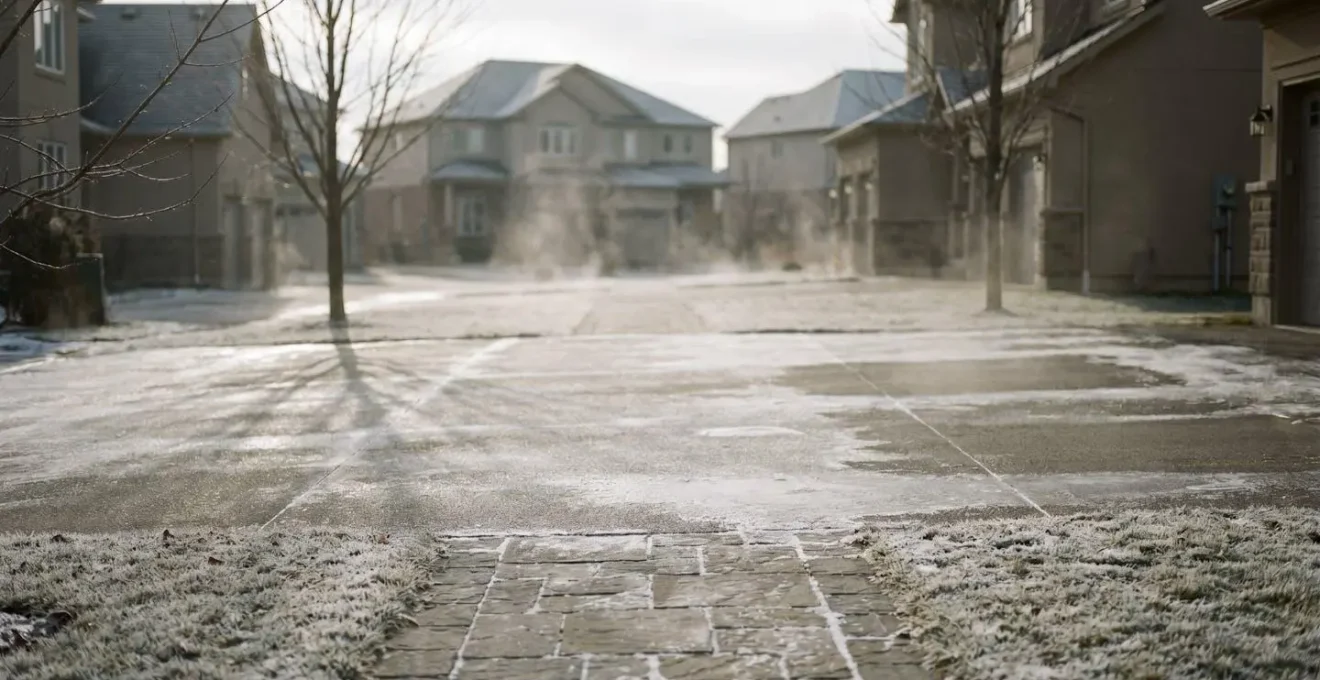
Summary: Shared Driveways and Paths: Who Is Liable if a Neighbour Slips on ‘Your’ Ice?
- The Loose Slate: Are You Liable if Storm Debris Hits Your Neighbour’s Conservatory?
- The Bath Overflow: Who Pays When Your Water Ruins the Flat Below’s Ceiling?
- Tree Root Encroachment: Liability for Damage to Neighbouring Foundations?
- The Rotten Fence: Who Is Responsible if It Falls on a Neighbour?
- Noise Complaints: Can You Be Sued for Stress Caused by Your DIY Project?
- Motion Sensor Lights: How Poor Visibility Increases Your Liability Risk?
- Falling Branches: Who Is Liable if Your Tree Crushes a Neighbour’s Car?
- Occupiers’ Liability Act: Are You Liable if a Delivery Driver Trips on Your Path?
The Loose Slate: Are You Liable if Storm Debris Hits Your Neighbour’s Conservatory?
The question of liability for storm damage is a foundational test of negligence versus an « Act of God. » If a tile is dislodged from a well-maintained roof during a severe, unforeseeable storm, it is generally considered a pure accident. In such cases, the property owner is unlikely to be held liable. The law does not expect homeowners to have complete control over extreme weather events. Your neighbour would typically need to claim on their own home insurance policy to cover the cost of repairs to their conservatory.
However, the situation changes entirely if there was a pre-existing issue. If you were aware that slates were loose, or if the roof was visibly in a state of disrepair, the damage becomes a foreseeable danger. Ignoring a known defect constitutes a failure to uphold your duty of care. In this scenario, your neighbour’s insurer could argue you were negligent and pursue you for the costs. The key is maintenance and diligence; a well-documented history of roof inspections and repairs is your strongest defence. As one legal analysis points out, the context of the event is paramount.
If an unforeseen event happens, such as a roof tile falling off their roof in a storm and which damages your property, then the neighbour is unlikely to be responsible.
– AA Insurance Legal Analysis Team, Neighbour Damage and Home Insurance Guide
Therefore, liability is not automatic. It hinges on whether you took reasonable steps to maintain your property in a safe condition before the storm hit. An accident caused by a sudden event is one thing; damage resulting from neglected maintenance is a clear breach of your duty of care.
The Bath Overflow: Who Pays When Your Water Ruins the Flat Below’s Ceiling?
Unlike storm damage, a water leak from your property into a flat below is almost always considered a matter of negligence. The source of the water is within your control, and therefore, you have a direct duty to prevent it from causing damage to others. These incidents are increasingly common, with legal expenses claims related to neighbour issues jumping from 14% in 2017 to nearly 16% in 2018, many of which involve « escape of water. »
When your bath overflows or a pipe bursts, you are generally liable for the resulting damage to your neighbour’s property, such as a ruined ceiling or damaged electronics. This falls under the tort of nuisance, where an action (or inaction) on your property interferes with your neighbour’s enjoyment of theirs. Your neighbour would claim on their home insurance, and their insurer would almost certainly exercise its right of ‘subrogation’—pursuing your insurance for reimbursement.
Because liability is highly likely, your immediate actions should focus on mitigating the damage and meticulously documenting the situation. This evidence is crucial for the inevitable insurance claims process. It helps establish the extent of the damage and the timeline of events, which can streamline the resolution between the two insurance companies. A clear record demonstrates responsible handling of the incident, even if the initial fault lies with you.
Action Plan: Documenting Water Damage for Insurance Claims
- Immediate Notification: Let your neighbour know politely as soon as you spot the first signs of damage. They may not even be aware there is a problem.
- Photographic Evidence: Keep a detailed record of any property damage, including dated photographs, to serve as clear evidence for insurance claims.
- Communication Log: Maintain brief, factual records of any conversations or communications with your neighbours to document the timeline of events.
- Document Before Cleaning: Gather evidence of the damage’s full extent before cleaning up to accurately show the severity of the problem.
- Contact Your Insurer: Inform your insurer promptly. They will typically handle the claim first and then investigate responsibility and recovery from the liable party.
Tree Root Encroachment: Liability for Damage to Neighbouring Foundations?
When tree roots from your property cross a boundary and cause damage to a neighbour’s foundations, driveway, or patio, the legal principle of nuisance once again applies. A tree is considered a natural part of the land, but you, as the landowner, are responsible for ensuring it does not become a nuisance to others. If your tree’s roots cause physical damage, you are generally liable for the cost of repairs.
The key legal test is foreseeability. If the tree is large, close to the boundary, and of a species known for invasive roots (like willow or poplar), the risk of damage is considered foreseeable. In this case, you have a proactive duty of care to manage that risk, perhaps through periodic pruning or the installation of a root barrier. Simply being unaware of the damage is not a sufficient defence if the risk should have been obvious to a reasonable person.
The law empowers the affected neighbour with the right of « abatement, » meaning they can legally cut back any roots or branches that encroach onto their property. However, they are only permitted to trim them back to the boundary line. If, in doing so, they kill the tree, they could be liable to you for its value. The preferred legal path is for the neighbour to inform you of the nuisance and request that you resolve the issue. If you fail to act, and damage occurs or worsens, your liability becomes much clearer.
A person who is injured or suffers property damage due to the fall of a tree rooted on the adjoining tract must prove that the owner of the adjoining tract was negligent in permitting a dangerous tree to remain standing and poised for damage.
– North Carolina State Extension, Tree Fall Liability Legal Analysis
This principle of proving negligence is central. For tree roots, evidence that you were notified of the problem or that the risk was patent (obvious) will be crucial in establishing your liability for the damage caused.
The Rotten Fence: Who Is Responsible if It Falls on a Neighbour?
The responsibility for a boundary fence is a classic source of neighbourly disputes. The first port of call should always be the title deeds for both properties. These documents often contain covenants that explicitly state who is responsible for maintaining which boundary. Look for a « T » mark on the plan; the « T » typically points into the property of the owner who is responsible for that boundary.
If the deeds are silent or unclear, the general rule is that you are responsible for preventing your property from causing a hazard. A fence that is visibly rotting and leaning presents a patent defect—a clear and obvious danger. If that fence falls and injures your neighbour or damages their property (e.g., a greenhouse or car), you will almost certainly be held liable for negligence. You had a duty to maintain or remove the hazardous structure, and your failure to do so directly caused the damage.
The financial consequences can be significant. While this data relates to trees, it illustrates the potential costs of falling objects; according to UK insurance data, the average claim for fallen tree damage is around £6,634. A falling fence could easily cause comparable damage to a vehicle or garden structure. Even if there is no explicit duty to have a fence, there is always a duty not to have a dangerous one.
If you share responsibility for a party wall or fence, maintenance costs should ideally be split. However, if your neighbour refuses to contribute to necessary repairs for a deteriorating fence, your legal standing to force them is weak unless it becomes a genuine hazard. At that point, your recourse is to put them on formal notice that their failure to act is creating a foreseeable risk, which strengthens your position if the fence later collapses onto your property.
Noise Complaints: Can You Be Sued for Stress Caused by Your DIY Project?
Liability is not limited to physical damage. It can also extend to the tort of ‘private nuisance,’ which is defined as an unlawful interference with a person’s use or enjoyment of their land. Persistent, excessive noise from a DIY project, especially at unreasonable hours, can certainly qualify. While you have the right to improve your home, that right does not extend to making your neighbour’s life intolerable.
For a noise complaint to succeed in a civil claim, the noise must be considered unreasonable by the courts. This is judged on factors such as its volume, duration, frequency, and the time of day it occurs. A single afternoon of drilling is unlikely to be actionable, but weeks of early morning hammering and sawing could be. If a neighbour can prove that the noise has caused them significant stress or loss of amenity, they could potentially sue for damages. Such cases fall under personal liability, a serious and costly issue. For context, while the data is from the US, Insurance Information Institute statistics show that personal liability issues account for about 2.5% of home insurance claims, with an average claim amount of $37,174 from 2019 to 2023.
Your home insurance is designed to protect you from such eventualities. As property insurance expert Mark Fitzpatrick states, this coverage is a crucial safeguard.
Home insurance covers personal liability issues; it can cover legal and medical expenses if you’re responsible for accidentally harming someone or damaging their property.
– Mark Fitzpatrick, Licensed Property and Casualty Insurance Producer, MoneyGeek Homeowners Insurance Coverage Analysis
The best course of action is preventative. Informing your neighbours of your project timeline, agreeing on reasonable working hours, and being mindful of the disruption you are causing can prevent a dispute from escalating into a legal claim. Proactive communication is not a legal defence in itself, but it can often stop a problem before it starts.
Motion Sensor Lights: How Poor Visibility Increases Your Liability Risk?
Your duty of care extends not just to neighbours but to all lawful visitors to your property, including delivery drivers, postal workers, and guests. Poor visibility, particularly on paths, steps, and driveways, is a major source of liability risk. A failure to provide adequate lighting can lead to slip, trip, and fall accidents, which can have devastating consequences. Falls are a serious public health issue; national safety data shows nearly eight million people are hospitalized because of falls each year.
Under the Occupiers’ Liability Act, you are expected to take reasonable steps to ensure your visitors are reasonably safe. Motion sensor lights are an excellent way to meet this duty, but only if they are correctly installed and maintained. A faulty or poorly aimed light that fails to illuminate a hazard, such as an icy patch or an uneven flagstone, can actually increase your liability. It creates a false sense of security.
The law views such a situation as creating a potential ‘hidden trap.’ An area that is intermittently plunged into darkness, or where shadows obscure a danger, is a classic example of a foreseeable hazard you have failed to address. As one legal analysis clarifies, the failure to illuminate is a key factor in premises liability.
Inadequate lighting can create a ‘hidden trap’ or hazard, especially if it fails to illuminate changes in level, obstacles, or icy patches.
– Occupiers’ Liability Legal Analysis, Premises Liability and Duty of Care Standards
Therefore, it is crucial to regularly check that your outdoor lighting is functioning correctly. Ensure the sensors have an appropriate range, the bulbs are working, and the light effectively covers the entire walkway. This simple maintenance task is a vital part of mitigating your risk and upholding your common duty of care to everyone who sets foot on your property.
Falling Branches: Who Is Liable if Your Tree Crushes a Neighbour’s Car?
The liability for a falling tree or branch follows the same logic as a loose roof slate: it all comes down to negligence and foreseeability. If a healthy tree unexpectedly loses a branch in a high wind, it is likely considered an accident. However, if the branch was dead, diseased, or clearly unstable, you, the tree owner, are liable for the damage it causes. Your failure to remove a known hazard constitutes a breach of your duty of care.
The distinction between a « patent » (visible) defect and a « latent » (hidden) defect is critical in these cases. You are expected to act on patent defects. You are not a professional arborist, but you are expected to notice if a large branch is dead, if the tree is leaning precariously, or if fungus is growing on the trunk. Ignoring these signs is negligence. This principle is well-established in common law.
Case Study: The Negligence Standard for Tree Liability
Under the common law negligence standard, a landowner has a duty to eliminate a reasonably foreseeable danger a tree may pose. Factors determining foreseeability include whether a tree is dead or visibly dying, whether it leans prominently toward the adjacent property, and whether its branches extend over structures or parked vehicles. The distinction between ‘patent’ (visible) and ‘latent’ (hidden) defects is crucial; liability arises from the failure to address a patent defect that a reasonable person would have identified as a risk.
Should your tree damage a neighbour’s car, the process typically involves insurance. Your neighbour will claim on their comprehensive car insurance first. Their insurer will then investigate the cause. If they find evidence of your negligence—for instance, photos showing the branch was rotten—they will pursue your homeowner’s liability insurance for reimbursement. This process is known as subrogation.
The neighbour would typically claim on their own comprehensive car insurance first. Their insurer might then pursue your homeowner’s liability insurance for reimbursement (a process called ‘subrogation’) if they can prove your negligence.
– SmartFinancial Insurance Analysis, Homeowners Insurance Damage Coverage Guide
Key Takeaways
- Liability hinges on ‘foreseeability,’ not just ownership. You are responsible for dangers you knew about or should have known about.
- The ‘common duty of care’ under the Occupiers’ Liability Act is the central legal principle governing your responsibilities to visitors and neighbours.
- Proactive maintenance and documentation (e.g., roof inspections, tree trimming records) are your strongest defence against claims of negligence.
Occupiers’ Liability Act: Are You Liable if a Delivery Driver Trips on Your Path?
All the scenarios discussed—from falling slates to icy paths—are ultimately governed by a single piece of legislation: the Occupiers’ Liability Act 1957. This Act establishes the legal responsibilities of the « occupier » of a premises towards their visitors. The consequences of failing to meet this duty are significant, not only in terms of property damage but also personal injury. According to the Bureau of Labor Statistics, victims of slip and fall accidents miss an average of 11 days of work, highlighting the serious impact these incidents can have.
The Act’s central concept is the « common duty of care. » This is a legal obligation on the occupier to ensure that any visitor is reasonably safe for the purpose of their visit. Crucially, the « occupier » is not necessarily the owner. It is any person or entity with a sufficient degree of control over the premises. This principle was famously established in a landmark case.
Case Study: Wheat v E Lacon & Co Ltd (1966) – Defining the ‘Occupier’
In this case, a guest in a pub fell on a poorly lit and maintained staircase. The court determined that both the brewery that owned the pub and the manager who ran it were ‘joint occupiers.’ They both had a degree of control over the premises and therefore shared responsibility for the visitor’s safety. This case established that there can be multiple occupiers of the same property, all sharing the same duty of care.
This has direct implications for shared driveways, common areas in blocks of flats, or rented properties. Both the landlord and the tenant could be considered occupiers, each with a duty of care. The Act itself provides the definitive statement of this fundamental responsibility.
An occupier of premises owes the same duty, the ‘common duty of care’, to all his visitors – a duty to take such care as in all the circumstances of the case is reasonable to see that the visitor will be reasonably safe in using the premises for the purposes for which he is invited or permitted by the occupier to be there.
– Occupiers’ Liability Act 1957, Section 2, as cited by Moore Barlow Legal Analysis
Therefore, if a delivery driver trips on a broken paving slab or a patch of ice you failed to clear on a path under your control, you are likely in breach of your common duty of care and could be held liable for their injuries.
Understanding these legal principles is not about creating an adversarial relationship with your neighbours. It is about responsible property ownership. By recognising your duty of care and taking proactive, reasonable steps to identify and mitigate foreseeable risks, you not only protect yourself from potential legal action but also contribute to a safer environment for everyone. If you are ever in doubt about a specific hazard or a complex boundary issue, seeking a formal legal opinion is the most prudent course of action.