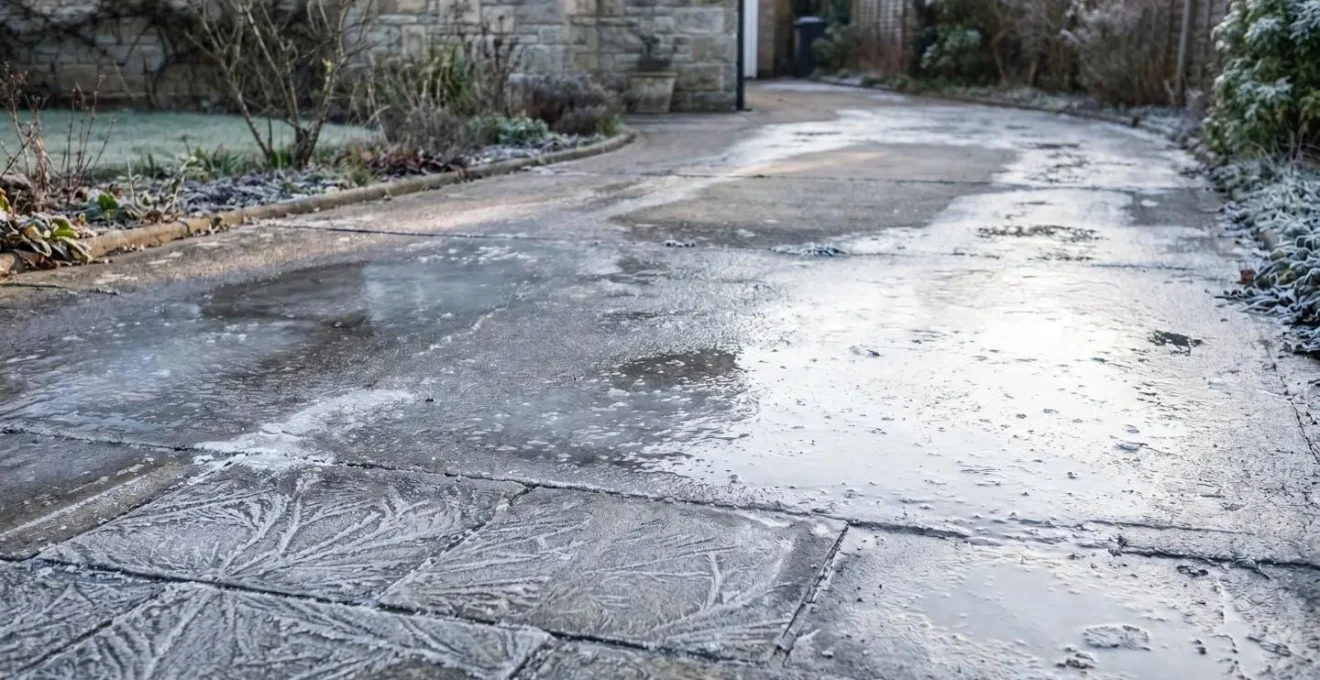
Your primary legal defence as a property owner isn’t having a perfectly safe property, but proving you took ‘reasonable care’ to make it so.
- The legal test for liability hinges on ‘foreseeability’—what a prudent person should have known about a potential hazard, from a loose paving slab to a diseased tree branch.
- Ignoring documented risks, like a council repair notice or an obviously loose handrail, effectively negates any possible defence and can make you personally liable.
Recommendation: Proactively create a ‘paper trail of prudence’ through regular, documented inspections and by ensuring any contractors you hire have their own liability insurance.
The dreaded letter arrives. A delivery driver, your postman, or even a guest slipped on your property, and they are holding you responsible. It’s a scenario that fills homeowners with dread, conjuring images of ruinous legal fees and compensation claims. The common advice is often reactive and simplistic: put salt on icy paths, fix loose slabs, and hope for the best. While these actions are necessary, they are merely the surface layer of your legal obligations as a property owner.
The reality of occupiers’ liability is far more nuanced. The law doesn’t expect your home to be an impregnable fortress, free from all conceivable risk. Instead, it asks a more profound question: did you act as a ‘reasonable and prudent’ landowner? This shifts the focus from preventing every possible accident—an impossible task—to demonstrating a consistent and provable pattern of care. The most critical factor in your defence is not what happened on the day of the accident, but the evidence of diligence you established in the months and years leading up to it.
This article will not rehash platitudes. As a solicitor who advises on these matters, I will guide you through the legal mechanics of your duty of care. We will explore the crucial difference between a genuine ‘Act of God’ and a foreseeable failure, understand why a contractor’s insurance is more important than your own for on-site incidents, and reveal how to build a robust, documented defence that can withstand legal scrutiny. The goal is to transform your understanding from one of anxious uncertainty to one of proactive, strategic risk management.
To navigate this complex legal landscape, we will dissect the core principles that determine liability. This guide is structured to address the most common and costly scenarios homeowners face, providing the insight a solicitor would offer to a client aiming to protect their assets. The following sections will provide a clear roadmap to understanding and mitigating your legal risks.
Summary: A Homeowner’s Guide to Navigating Property Liability Claims
- Why Your Policy Must Cover Up to £2 Million in Legal Liability Costs?
- Falling Branches: Who Is Liable if Your Tree Crushes a Neighbour’s Car?
- Hiring a Builder? Why Their Insurance Matters More Than Yours for On-Site Injuries
- The Legal Cost of Ignoring a Council Repair Notice on Your Property
- Hosting a Garden Party? How to Check if Your Liability Cover Extends to Guests
- Why Loose Rugs and Stair Carpets Are the #1 Cause of Domestic Injury Claims?
- The Loose Slate: Are You Liable if Storm Debris Hits Your Neighbour’s Conservatory?
- Occupiers’ Liability Act: Are You Liable if a Delivery Driver Trips on Your Path?
Why Your Policy Must Cover Up to £2 Million in Legal Liability Costs?
Many homeowners believe a standard insurance policy provides adequate protection, but they often underestimate the true cost of a serious liability claim. The landscape of personal injury is changing, with an 18% increase in personal injury claims noted in the second quarter of 2024 alone in the UK. This rising tide of litigation means that seemingly minor incidents can spiral into financially devastating events. A £2 million public liability cover is often cited as a standard, and for good reason.
This figure is not arbitrary. It is calculated to cover a catastrophic scenario where a visitor suffers life-altering injuries on your property. The initial compensation for pain and suffering is only the beginning. The true cost of a claim extends far beyond the victim’s immediate needs, encompassing a cascade of legal and logistical expenses that can quickly exhaust a lesser policy. A solicitor advising a defendant must prepare for the worst-case scenario, which includes not only compensating the injured party but also covering the extensive costs of the legal battle itself.
Understanding where this money goes is crucial for appreciating the necessity of adequate cover. The £2 million figure is designed to be a fortress, protecting your personal assets from the following potential costs:
- Initial compensation payment: The baseline settlement for the injury or loss itself.
- Legal defence fees: The cost of your own solicitors to defend your position, even if you ultimately win the case.
- Claimant’s legal expenses: In a losing case, the court will likely order you to pay the other side’s solicitor costs.
- Expert witness fees: Fees for medical specialists, structural engineers, or arborists required to provide testimony.
- Loss of earnings calculation: Actuarial assessments to determine compensation for long-term income loss.
- Lifelong medical care provision: The staggering cost of private treatment, rehabilitation, and specialized care for catastrophic injuries.
- Home modification and specialized equipment: Expenses for making the claimant’s home accessible, such as installing stairlifts, ramps, and adapted bathrooms.
Falling Branches: Who Is Liable if Your Tree Crushes a Neighbour’s Car?
Trees are a common source of disputes between neighbours, but when they cause damage, the legal principles are clear and unforgiving. The question of liability doesn’t rest on whether you were personally aware of a tree’s defect, but on whether you *should* have been aware. This is the legal concept of « constructive knowledge, » and it is a cornerstone of property liability. A landmark case, Khan v Kane, established that a homeowner is liable for damage if it was ‘reasonably foreseeable’ to a prudent landowner, regardless of their actual knowledge. The court ruled that factors like a tree’s size, species, and proximity to a boundary meant the risk of damage was foreseeable, even if the owner themselves had not noticed it.
This means your legal duty is proactive, not reactive. You are expected to inspect your trees for signs of disease, decay, or instability. Ignoring a large, dead branch overhanging your neighbour’s property is a clear breach of this duty. The law expects you to act as a reasonable and prudent person, which involves identifying and mitigating obvious hazards. Simply claiming ignorance is not a valid defence if the hazard was plain to see. The health of the tree, any visible fungal growth, or large dead limbs are all indicators that a prudent owner would be expected to notice and act upon. This duty is particularly high for mature trees near property lines or public footpaths.
Your Action Plan: Creating a ‘Paper Trail of Prudence’ for Tree Management
- Visual Inspection Frequency: Conduct and document a basic check at least annually and after major storms. Look for dieback, weeping wounds, or signs of insect infestation and take dated photos.
- Professional Arborist Survey: Engage a qualified arborist every 2-3 years for mature trees near boundaries. This professional report is a key piece of evidence.
- Document and Date All Work: Retain written reports, quotes, and invoices for any tree work performed, showing you acted on professional advice.
- Respond to Neighbour Concerns Formally: If a neighbour expresses concern, respond in writing and commission a professional inspection immediately. Keep copies of all correspondence.
- Action Hazards Promptly: If an inspection identifies a hazard, arrange remedial work with a competent, insured tree surgeon without delay and document the action taken.
Hiring a Builder? Why Their Insurance Matters More Than Yours for On-Site Injuries
When undertaking construction or renovation work, many homeowners focus on their own insurance policy. However, from a liability perspective, the most important document is the one belonging to your contractor. When you hire a builder, you are effectively inviting them to take control of a portion of your property. In doing so, you also transfer a significant portion of the duty of care for that specific area and activity. If a tiler drops a heavy box on their own foot or a roofer falls from a ladder they erected, the primary responsibility almost always lies with them and their employer, not the homeowner.
The key is that the contractor is a specialist performing their professional trade. They are expected to have their own safe systems of work, their own equipment, and, crucially, their own Public Liability and Employers’ Liability Insurance. This insurance is designed specifically to cover accidents that happen in the course of their business activities. By hiring a properly insured contractor, you are performing a critical legal act: the transfer of risk. The financial risk of an on-site injury moves from your personal assets and your homeowner’s policy to the contractor’s specialist insurer.
Conversely, hiring an uninsured individual or « cash-in-hand » worker is one of the most financially reckless decisions a homeowner can make. In this scenario, the risk does not transfer. If that uninsured worker is injured, they may have no other recourse than to sue you personally, as the « occupier » of the premises. Your standard home insurance may even decline to cover the claim, arguing that the work was commercial in nature. As the experts at Affordable Contractors Insurance succinctly put it:
Hiring an uninsured contractor transfers risk to you. Hiring an insured contractor transfers risk to their carrier—where it belongs.
– Affordable Contractors Insurance, Guide on verifying contractor insurance
Before any work begins, you must insist on seeing a valid certificate of insurance from your builder and verify that the cover is adequate for the scale of the job. This single piece of paper is your most powerful defence.
The Legal Cost of Ignoring a Council Repair Notice on Your Property
While most homeowners understand they have a general duty to keep their property in a reasonable state of repair, the legal landscape changes dramatically the moment a statutory body, like a local council, becomes involved. A formal repair notice issued under legislation like the Housing Act is not a friendly suggestion; it is a legal instrument that fundamentally alters your liability. Ignoring such a notice is legally indefensible and financially catastrophic.
The notice serves as irrefutable proof that you had formal, documented knowledge of a specific hazard. It eliminates any possibility of pleading ignorance. From the moment the notice is served, the clock is ticking. Every day you fail to comply, your negligence deepens, and your potential liability skyrockets. If an accident occurs that is related to the defect identified in the notice, your position in court becomes almost impossible to defend. The notice itself will be presented as « Exhibit A » by the claimant’s solicitor, proving you were aware of the danger and chose to do nothing.
Furthermore, insurers are highly likely to refuse to cover claims arising from such deliberate non-compliance. A clause in most policies excludes liability for illegal acts or the failure to comply with a statutory notice. This means you could be left personally liable for the entirety of the compensation and legal costs. The escalation from a minor repair to a life-changing financial loss can be shockingly swift.
The Escalating Cost Timeline: From £50 Repair to £55,000 Total Loss
This scenario demonstrates the financial consequences of non-compliance. On Day 1, a loose handrail on your front steps would cost £50 to repair. On Day 30, the council issues a formal repair notice documenting the hazard, which you ignore. On Day 45, a delivery driver grabs the handrail, falls, and suffers a broken wrist. The subsequent claim includes £15,000 for medical costs, £25,000 in your legal defence fees, and a court order to pay the claimant’s £10,000 legal costs. Additionally, the council imposes a £5,000 fine for non-compliance. The total cost is £55,000. The council notice acts as the ‘smoking gun,’ proving you knew about the hazard, making your defence untenable and potentially voiding your insurance cover for the incident.
Hosting a Garden Party? How to Check if Your Liability Cover Extends to Guests
When you invite guests onto your property for a social gathering, your legal duty of care is heightened. The law considers that you have a responsibility to ensure the environment is reasonably safe for your visitors. While home insurance policies typically include public liability cover, it’s not a blanket guarantee, especially when the nature of the event changes. A quiet family barbecue is one thing; a large party with hired equipment or paying guests is another matter entirely.
The first step is to scrutinize your policy for exclusions. Many insurers place limits on liability for activities they consider « commercial » or outside the scope of normal domestic use. If you charge an entry fee (even for charity), hire a bouncy castle, or host a very large number of people, you may be inadvertently voiding your standard cover. It is always prudent to contact your insurer before any large event to confirm your coverage. They may require you to take out a temporary policy extension or endorsement to ensure you are protected.
Beyond insurance, your practical duty of care involves a thorough risk assessment of your property in the context of the event. Hazards that are manageable in daily life can become significant dangers in a party setting. Extension cords for music, temporary lighting, garden hoses, and even decorative rugs on a patio can become serious trip hazards when guests are distracted and mingling. Serving alcohol also significantly increases your duty of care, as you are expected to anticipate that guests may be less attentive to their surroundings.
A proactive homeowner should conduct a pre-event audit to identify and mitigate these risks. This demonstrates that you have acted as a « reasonable host. » Your checklist should include:
- Inspecting for trip hazards: Walk the entire guest area looking for cables, uneven paving, and loose rugs that need to be secured or removed.
- Ensuring adequate lighting: Check that all paths, steps, and outdoor areas will be well-lit as evening falls. Install temporary lighting if necessary.
- Securing dangerous areas: Rope off or clearly mark any unsafe zones, such as unfenced ponds, pools, or construction areas.
- Food and alcohol safety: If providing food, ensure it is handled safely. If serving alcohol, provide non-alcoholic options and consider how guests will get home safely.
- Briefing guests on risks: A simple verbal warning at the start of the event about known hazards (e.g., « watch your step on the patio ») can be a powerful piece of evidence that you took your duty of care seriously.
Why Loose Rugs and Stair Carpets Are the #1 Cause of Domestic Injury Claims?
In the world of personal injury law, the most frequent claims are not always the most dramatic. While incidents involving falling trees or collapsing structures capture the imagination, the mundane reality is that a huge number of claims originate from simple, everyday hazards like loose rugs and worn stair carpets. These items are so ubiquitous in our homes that we often fail to see them for what they are: one of the most common sources of liability for property owners. The financial absurdity of ignoring such a small risk is staggering.
| Prevention Measure | Cost of Prevention | Average Claim Cost if Accident Occurs | Financial Disparity |
|---|---|---|---|
| Rug tape / non-slip underlay | £10-£20 | £10,000-£25,000 (slip and fall claim) | 500x to 2,500x more expensive |
| Carpet re-stretching service | £50-£150 | £10,000-£25,000 (trip on loose carpet) | 66x to 500x more expensive |
| Stair carpet runner replacement | £200-£400 | £15,000-£40,000 (fall down stairs – more severe injury) | 37x to 200x more expensive |
| Handrail repair or installation | £50-£200 | £20,000-£50,000 (fall with no support – high injury risk) | 100x to 1,000x more expensive |
The reason these seemingly minor issues lead to so many successful claims is simple: they fail the « reasonable care » test spectacularly. A curled rug corner or a rippled carpet on a staircase is an obvious and easily remediable hazard. Unlike a hidden structural defect, it is there in plain sight. A claimant’s solicitor will argue that any prudent homeowner would have noticed and fixed such a defect for a negligible cost. Your failure to spend £10 on rug tape can be framed as clear negligence when a visitor trips and suffers a broken hip, leading to a £25,000 claim. It’s a stark reality that 21% of all personal injury claims in the UK are public space accidents, and a significant portion of these occur on private property due to such preventable slips and trips.
From a legal standpoint, the very simplicity and low cost of the fix become the most damning evidence against you. There is no complex defence. You cannot argue that the hazard was hidden or that the cost of repair was prohibitive. The argument is straightforward: the risk was visible, the solution was cheap, and your failure to act directly caused the injury. This makes such cases relatively easy for a claimant to win and extremely difficult for a homeowner to defend.
Key takeaways
- The ultimate legal test is ‘reasonable foreseeability’ and demonstrable care, not achieving perfect, accident-proof safety on your property.
- Your best defence is a proactive ‘paper trail of prudence,’ consisting of documented inspections, professional reports, and prompt action on identified hazards.
- Transferring risk by verifying contractor insurance and immediately complying with any council repair notices are non-negotiable actions to protect your assets.
The Loose Slate: Are You Liable if Storm Debris Hits Your Neighbour’s Conservatory?
When a storm hits and debris from your property causes damage to a neighbour’s, many homeowners are quick to claim it was an « Act of God. » While this defence exists in law, its application is extremely narrow and frequently misunderstood. A court will not simply absolve you of responsibility because the wind was strong. The critical legal test is one of foreseeability: was the damage a result of an unprecedented weather event, or was it the result of a pre-existing defect on your property that a typical storm exposed?
UK case law provides a clear framework. A true « Act of God » event is one that is so extraordinary and unforeseeable that no reasonable human foresight could be expected to anticipate it—think record-breaking hurricane-force winds in an area that has never experienced them. However, a typical autumn gale or a heavy winter storm does not meet this threshold. These are predictable weather events. The case of Stagecoach v Hind (2014) established that a landowner has a duty to act reasonably and prudently, which includes conducting regular inspections to identify potential dangers. The key question a court will ask is: Would a regular inspection have revealed the defect?
If a slate was visibly loose, if moss buildup was trapping water, or if the roof had not been inspected for a decade, then you have likely breached your duty of care. The storm simply provided the final push for a failure that was waiting to happen. In this scenario, the damage is legally your responsibility because your negligence created the conditions for it. Conversely, if you have records of regular roof inspections and maintenance, and a slate is dislodged by a named storm with documented, record-breaking wind speeds, you have a strong foundation for an « Act of God » defence. Your maintenance records become the crucial evidence that you acted as a prudent landowner, and the event was truly beyond your control.
Occupiers’ Liability Act: Are You Liable if a Delivery Driver Trips on Your Path?
The Occupiers’ Liability Act 1957 places a clear duty on you, the homeowner, to ensure that visitors are reasonably safe while using your premises for the purpose for which they are invited. This duty absolutely extends to delivery drivers, postal workers, and anyone else entering your property to perform a service. If your path is covered in moss, has a loose paving slab, or is poorly lit at night, and a driver trips and injures themselves, you are likely to be found liable. The starting point of any claim is that you, the occupier, are responsible for the state of your property.
However, this duty is not absolute. The law does not expect you to guarantee the safety of every individual against their own recklessness. A powerful concept in defending such claims is that of « contributory negligence. » This legal principle argues that the injured party, through their own actions, contributed to their accident. While your duty is to provide a safe environment for the *reasonable execution* of the delivery, you are not necessarily liable if the driver’s actions were demonstrably unreasonable. Your defence as a homeowner often rests on proving that the claimant failed to take reasonable care for their own safety.
Documenting scenarios where the driver’s execution of their task was unreasonable is key to building a defence of contributory negligence. This can significantly reduce the compensation you have to pay, or even defeat the claim entirely. Examples include:
- Using the designated path vs. a shortcut: If you provide a safe, well-lit path and the driver vaults a wall to cut across a muddy lawn at night, they are taking an unreasonable risk.
- Ignoring warnings: If you have placed a clear ‘Wet Floor’ sign and the driver ignores it, they have contributed to their own fall.
- Device distraction: If doorbell camera footage shows the driver was looking at their phone or scanner instead of where they were walking, this is strong evidence of contributory negligence.
- Unreasonable time or manner: A driver attempting a delivery in an unsafe manner or at a time when they could not reasonably expect the premises to be perfectly safe may share responsibility for any accident.
The core principle is that liability is a two-way street. While you have a duty to provide a safe environment, visitors also have a duty to watch out for themselves.
To apply these principles effectively, the next logical step is to conduct a thorough audit of your own property’s potential liabilities, documenting both the condition of the property and any steps you take to mitigate risks.