In summary:
- Your home insurance is a contract where non-compliant locks can void a claim under the ‘reasonable care’ clause.
- BS3621 is the benchmark for mortice locks on wooden doors, but uPVC and composite doors need TS 007 3-star rated ‘anti-snap’ cylinders.
- Beyond the front door, insurers have strict requirements for patio doors, accessible windows, and even side gates.
- Losing keys, especially with an address, creates a critical risk that mandates immediate lock replacement to maintain cover.
- Documenting your locks with photos and receipts is not optional; it is your essential evidence in a claim dispute.
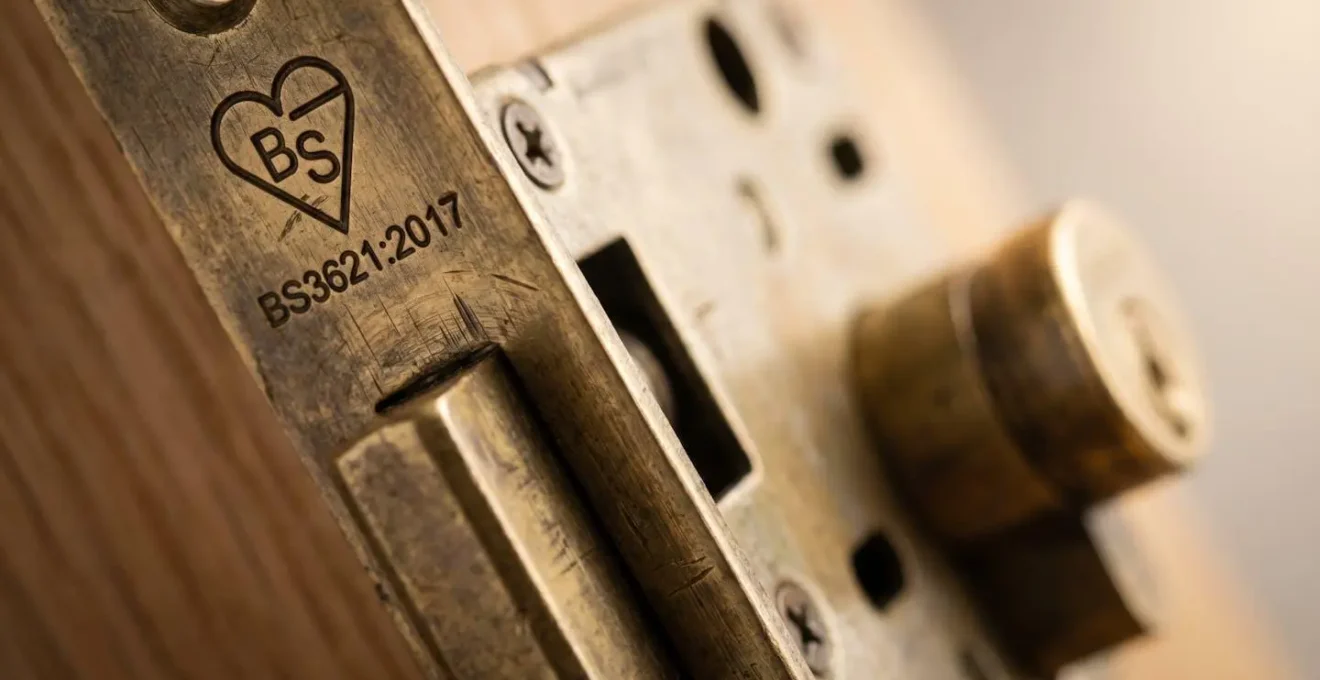
For homeowners with traditional wooden doors, the phrase « 5-lever mortice lock » often feels like an arcane insurance requirement. You may have been told to « check for the Kitemark, » but what does that truly mean? More importantly, what are the consequences if you get it wrong? The common advice focuses on the hardware, treating it as a simple security issue. This approach is dangerously incomplete. The lock on your door is not just a piece of metal; it’s a clause in a legally binding contract you have with your insurer.
The real issue isn’t just deterring a burglar; it’s preventing your insurer from legally rejecting your claim after a break-in. This is where the concept of the ‘reasonable care’ clause becomes critical. Many policies are written in a way that a non-compliant lock is seen as a failure on your part to adequately protect your property, giving the insurer a legitimate reason to refuse payment. This guide moves beyond the platitudes. As professional locksmiths, we will explain the contractual mechanics at play, decode the standards for all entry points, and show you how to build an undeniable file of evidence to prove your compliance and safeguard your home and finances.
This guide provides a comprehensive walkthrough of the common pitfalls and specific requirements that homeowners frequently overlook. We will explore each critical area of your home’s security, ensuring you have the knowledge to assess your own property and meet your contractual obligations to your insurer.
Summary: A Locksmith’s Guide to Insurance-Approved Security
- Anti-Snap Cylinders: Why Standard Euro Locks Leave You Vulnerable in 15 Seconds?
- Patio Door Locks: The ‘Lift and Drop’ Vulnerability Most Owners Ignore
- Lost Keys: When Does Losing a Key Require a Full Lock Replacement?
- Key-Operated Window Locks: Are They Mandatory for Ground Floor Windows?
- Stiff Locks and WD40:Leasehold Flats: Why You Still Need Contents Insurance Even if the Freeholder Insures the Building?
- Why Do Insurers Reject Claims if Your Locks Are Not BS3621 Compliant?
- Side Gates and Trellis: The Weak Point 70% of Burglars Exploit
- How to Reduce Your Home Insurance Premium by £200 With Smart Security Upgrades
Anti-Snap Cylinders: Why Standard Euro Locks Leave You Vulnerable in 15 Seconds?
While the BS3621 standard is the cornerstone for wooden doors, it is irrelevant for the millions of homes with uPVC and composite doors. These doors use a « Euro cylinder » lock, and the vast majority installed before recent years have a critical design flaw. Burglars have perfected a technique called « lock snapping, » where they apply force to the outside of the cylinder, breaking it at its weakest point. As professional locksmiths, we must stress the urgency of this threat; security experts warn that a criminal can snap a standard euro cylinder lock in less than 10 seconds, gaining quiet, swift access to your home.
Insurers are fully aware of this vulnerability. Consequently, many policies now specify a requirement for « anti-snap » locks on all final exit uPVC or composite doors. Failure to have these installed is a clear breach of your duty to take reasonable care. The recognised standards are either a 3-star « Diamond Grade » cylinder (marked with three stars inside a diamond) or a combination of a 1-star cylinder paired with 2-star security handles. This is a crucial detail: the ‘equivalent security’ must be documented. Simply having a multi-point locking system is not enough if the cylinder itself is the weak link. Verifying your cylinder’s rating is a non-negotiable step for insurance compliance.
Patio Door Locks: The ‘Lift and Drop’ Vulnerability Most Owners Ignore
Sliding patio doors are a popular feature, but they are also a notorious weak point in home security. Standard factory-fitted locks are often insufficient, and burglars exploit a common vulnerability known as the « lift and drop » method. By levering the door upwards from the outside, they can lift the rollers off the track and simply pull the door out of its frame. This technique is silent, requires minimal force, and completely bypasses the locking mechanism. Combined with other methods, security research indicates that up to 22% of break-ins occur through these doors.
This illustration shows a common and effective countermeasure. A simple, robust security bar placed in the bottom track physically prevents the door from sliding, even if the lock is bypassed. More importantly, it can also prevent the door from being lifted, acting as a crucial secondary security layer.
Your insurance policy expects you to have secured these vulnerable points. Simply relying on the original lock is often not considered ‘reasonable care’. You should test your own door: grasp the handle and see if you can lift it significantly in its frame. If you can, you have a problem. Retrofitting anti-lift plates or installing a high-quality security bar is an essential upgrade that an insurer would expect to see on an accessible patio door. Without these measures, a claim following a ‘lift and drop’ entry could be in serious jeopardy.
Lost Keys: When Does Losing a Key Require a Full Lock Replacement?
Losing a key is a common, stressful event, but its impact on your home insurance is often misunderstood. The core issue is not just the lost key, but the chain of risk it creates. An insurer’s perspective is based on a simple question: could this lost key be used to enter your property without force? If the answer is yes, your ‘reasonable care’ obligation has been compromised. The correct response depends entirely on the context of the loss, as a single, unidentifiable key dropped in a random location carries a different risk profile than a set of keys stolen from a handbag containing a driver’s license.
Ignoring this risk can have catastrophic consequences for a future claim. If a burglary occurs using a key, and you failed to change the locks after a known loss, your insurer has clear grounds for rejection. It is your responsibility to assess the risk and act immediately. This matrix outlines the standard industry expectations and the actions required to maintain your insurance cover.
Cost-Effective Compliance: Re-keying vs. Full Replacement
Re-keying (also called re-pinning) involves changing the internal pin configuration of a BS3621 lock so that old keys no longer work, while maintaining the same lock body and certification. A qualified MLA-approved locksmith can re-key a 5-lever mortice lock for approximately £80-£120 per lock, compared to £150-£250 for full replacement. Crucially, the lock retains its BS3621 kitemark and insurance approval status. The locksmith must provide written documentation confirming: (1) the lock still meets BS3621:2007 or later standards after re-keying, (2) new keys issued, (3) date of service. This documentation is essential for insurance purposes. Re-keying is only possible if the lock body is undamaged and still functions to BS3621 specifications. If the lock shows wear, stiffness, or is an older pre-2007 version, insurers may require full replacement to current standards.
The following table, based on common insurance policy terms and locksmith best practices, provides a clear guide to action. You must document any incident and the remedial steps taken, keeping receipts and locksmith invoices as part of your evidential burden.
| Loss Scenario | Risk Level | Insurance Requirement | Recommended Action | Timeframe |
|---|---|---|---|---|
| Single unidentifiable key lost in public area | Low | Notify insurer (some policies) | Re-key lock or full replacement | Within 7 days |
| Keys with address tag or ID | High | Immediate notification mandatory | Full lock replacement | Within 24 hours |
| Handbag/wallet with keys + driver’s license | Critical | Immediate notification + evidence of action | Emergency lock replacement + alarm code change | Within 12 hours |
| Keys stolen during burglary | Critical | Police report + immediate notification | Full lock replacement on all entry points | Before leaving property |
| Key lost by tradesperson/cleaner | Medium-High | Written notification to insurer | Re-key or replacement + change service access | Within 48 hours |
Key-Operated Window Locks: Are They Mandatory for Ground Floor Windows?
The focus on doors can often lead homeowners to overlook another critical entry point: windows. Your insurance policy will almost certainly contain a clause requiring key-operated locks on all accessible windows. The ambiguity lies in the definition of « accessible. » It does not simply mean « on the ground floor. » An insurer’s loss adjuster will interpret this term from a burglar’s perspective, which is a much broader definition.
A window on the first floor is considered accessible if it is above a flat roof, a conservatory, or adjacent to a sturdy drainpipe that could be used for climbing. Any window that can be reached without a ladder is, in the eyes of your insurer, an accessible window and therefore must be secured with a key-operated lock. Furthermore, the policy implies that these locks are not only fitted but are also actively used when the property is unoccupied or at night. Simply having the locks is insufficient; leaving a window unsecured is a breach of your duty of care. The key should also be removed from the lock and stored safely nearby, but not in a place visible or reachable from the outside.
To avoid any dispute, you must conduct a thorough audit of your property. Use the following checklist to identify which of your windows fall into the « accessible » category and require compliant locks:
- Ground floor windows: All windows on ground level automatically classified as ‘accessible’ — key-operated locks mandatory.
- Windows above flat roofs, garages, or extensions: Treat as ground level if roof is easily accessible from ground or adjacent structures.
- Windows near drainpipes or trees: Any window within 2 meters of a climbable drainpipe, tree, or external structure is ‘accessible’.
- First-floor windows with balcony access: Windows opening onto balconies or terraces require key-operated locks.
- Basement or below-ground windows: Always ‘accessible’ — often require both locks and security grilles per insurer requirements.
Stiff Locks and WD40:Leasehold Flats: Why You Still Need Contents Insurance Even if the Freeholder Insures the Building?
Your contractual obligations for home security extend beyond just having the right type of lock; they encompass proper maintenance and understanding specific legal frameworks, such as those in leasehold properties. Neglecting either can be a costly mistake, creating an unintentional breach of your ‘reasonable care’ duty.
Lock Maintenance is Not Optional: A BS3621 lock that has been neglected can fail under pressure, and using the wrong products can accelerate this failure. A common mistake is using oil-based lubricants like WD-40 on cylinder locks. This can wash out the essential grease packed inside the mechanism, attracting dust and causing the pins to stick and wear out prematurely. A stiff, poorly maintained lock is not operating to its certified standard. As experts in lock performance, we see this frequently. Yale, a leading manufacturer, is very clear on this point:
We recommend using a PTFE based lubricant. A small amount of lubricant should be applied to the key and then inserted into the cylinder.
– Yale Security, Yale BS1 Max Security Nightlatch Product Documentation
Leasehold Complexities: For leaseholders, there is another layer of complexity. The freeholder’s building insurance covers the structure, but your contents policy covers your possessions. Critically, your contents insurer will have its own security requirements for your flat’s entrance door, regardless of who is responsible for it under the lease. If the communal entrance is weak or your flat’s lock is not BS3621 compliant, your contents claim could be rejected, leaving you in a difficult position between the freeholder and your own insurer. You must proactively verify the locks on your own front door and check your lease to understand who is responsible for upgrades.
Why Do Insurers Reject Claims if Your Locks Are Not BS3621 Compliant?
The cold reality of the insurance industry is that not all claims are paid. In fact, recent industry analysis revealed that 42% of all claims were closed without payment. While many factors contribute to this, one of the most clear-cut reasons for rejection in burglary claims is non-compliance with security requirements. The core reason lies in the contractual nature of your insurance policy. When you agree to the terms, you are making a promise to the insurer that you will ‘take reasonable care’ to protect your property. Specifying BS3621 locks is how the insurer defines ‘reasonable care’ for doors.
This illustration captures the essence of the responsibility. The lock is not just hardware; it is the physical manifestation of your part of the insurance agreement, a promise you hold in your hands to protect your home.
If a burglary occurs and your lock is found to be non-compliant, the insurer will invoke the ‘breach of policy conditions’ clause. Their argument is simple and legally sound: you did not uphold your end of the bargain. Even if the burglar gained entry by breaking a window, the insurer may argue that had the correct lock been fitted, the house would have presented a tougher target, and the burglar might have moved on. The burden of proof shifts entirely to you to demonstrate that your security was compliant, which is nearly impossible after the event without prior documentation.
The ‘Breach of Reasonable Care’ Contractual Mechanism
Insurance policies contain a standard clause requiring policyholders to ‘take reasonable care’ to prevent loss or damage. Installing or maintaining locks that do not meet BS3621 standards (when specified in the policy terms) is interpreted by insurers as a failure to uphold this duty. The contractual chain works as follows: (1) Policy explicitly states ‘five-lever mortice lock conforming to BS3621 on all exit doors,’ (2) Policyholder confirms compliance when taking out policy, (3) Burglary occurs through door with non-compliant lock, (4) Insurer investigates and discovers breach of stated security requirements, (5) Claim rejected under ‘breach of reasonable care’ or ‘breach of policy conditions.’ Even if the burglar used forced entry, the insurer can argue that a BS3621-compliant lock would have provided greater resistance, potentially preventing the theft. The burden of proof shifts to the policyholder to demonstrate the lock was compliant — a very difficult task without clear evidence.
Side Gates and Trellis: The Weak Point 70% of Burglars Exploit
A home’s security is only as strong as its weakest point, and very often, that is the side or rear access. Burglars prefer to operate away from the street, out of sight. A low, unlocked, or flimsy side gate is an open invitation to the most vulnerable parts of your property. While front doors are often well-secured, police data confirms that 76% of burglars gain access through doors, with a significant portion of those being rear or side entry points. Insurers know this and expect you to have taken reasonable precautions to secure your entire perimeter, not just the front door.
Effective perimeter security is about creating layers of deterrence, a concept we call ‘security layering’. A tall, solid gate is a good start, but it’s not enough. The hinges should be inaccessible from the outside, and the lock should be a high-quality, key-operated bolt or a close-shackle padlock that can’t be easily cut by bolt cutters. Adding hostile, thorny plants like pyracantha along fence lines and a motion-activated security light adds further layers of difficulty and risk for an intruder. Even adding trellis to the top of a fence can make it harder to climb, but ensure it maintains visibility so your property isn’t completely shielded from view.
From an insurance perspective, failing to secure a side gate can be viewed as negligence. If a burglar walks through an unlocked gate and then forces a rear door, the insurer might argue that your initial failure to secure the perimeter contributed to the loss. You must apply the same level of diligence to your property’s boundary as you do to its main entrance, documenting the security measures you have in place.
Action Plan: Verifying Your Lock’s Insurance Compliance
- Check for the 3-star diamond grade cylinder marking (TS 007 standard) on the cylinder body visible when the door is open.
- Verify the alternative configuration: a 1-star cylinder paired with 2-star security handles equals 3-star total protection.
- Photograph the star rating clearly visible on both the cylinder and handle, ensuring manufacturer markings are legible.
- Document the installation date and keep receipts as proof of ‘reasonable care’ for your insurer.
- Request written confirmation from your locksmith that the installation meets TS 007 or SS312 Diamond standards, recognized as ‘equivalent security measures’ for uPVC and composite doors.
Key Takeaways
- Your lock is a contractual term: BS3621 or TS 007 3-star compliance is not a suggestion, it’s a condition of your insurance policy that you must meet.
- Security is layered: An insurer assesses the entire property, including ‘accessible’ windows, patio doors, and side gates, not just the front door.
- Documentation is your defence: In the event of a claim, the burden of proof is on you. Photos, receipts, and locksmith certifications are your essential evidence to counter a ‘breach of reasonable care’ rejection.
How to Reduce Your Home Insurance Premium by £200 With Smart Security Upgrades
While the primary driver for upgrading your locks should be to ensure claims are paid, a common question is whether these upgrades will lead to lower insurance premiums. The answer is nuanced. Insurers offer discounts for measures that demonstrably reduce their risk. However, fitting BS3621 locks is now so fundamental that it’s considered a baseline requirement; it won’t earn you a discount, but failing to have them will either prevent you from getting cover or result in a rejected claim.
True discounts are typically reserved for professionally installed and certified systems that go beyond the minimum standard. These include NSI or SSAIB certified alarm systems, professionally installed CCTV, and, increasingly, smart water leak detectors which mitigate escape of water claims—one of the biggest costs for insurers. It is crucial to note that DIY ‘smart locks’ are often not recognised by UK insurers and may even invalidate your policy if they do not also carry a BS3621 or equivalent certification, a detail many homeowners miss. Before investing in any security upgrade with the aim of a premium reduction, you should always consult your insurer to confirm which systems they recognise and what level of certification is required.
The following table provides a realistic overview of the typical costs versus the potential insurance discounts for various security upgrades in the UK market. It highlights that the payback period can be long, reinforcing that the main financial benefit of security is claim validity, not premium savings.
| Security Upgrade | Est. Installation Cost | Typical Insurer Discount | Annual Savings (avg. £800 premium) | ROI Payback Period | Certification Required |
|---|---|---|---|---|---|
| BS3621 Locks (all external doors, 3 locks) | £450 – £750 | 0-2%* | £0 – £16 | N/A (often standard requirement) | BSI Kitemark BS3621:2007+ |
| NSI/SSAIB Certified Alarm System | £500 – £1,200 | 5-15% | £40 – £120 | 4-10 years | NSI Gold or SSAIB certified installer |
| 3-Star Diamond Anti-Snap Cylinders (uPVC doors) | £200 – £400 | 2-5% | £16 – £40 | 5-10 years | TS 007 or SS312 Diamond |
| Smart Water Leak Detectors (professionally installed) | £300 – £600 | 3-8% | £24 – £64 | 5-9 years | Insurance-approved brand required |
| Professionally Installed CCTV System | £800 – £2,000 | 5-10% | £40 – £80 | 10-25 years | Professional installation certificate |
| Smart Lock (DIY installed) | £150 – £350 | 0%* | £0 | N/A (no discount offered) | Not recognized by most UK insurers |
| *Note: BS3621 locks typically offer no discount as they are a standard policy requirement. Smart locks without BS3621 certification may actually void claims. Source: Comparison of major UK insurers 2024-2026 policy terms. |
By systematically auditing your property against these professional standards and documenting your compliance, you transform your relationship with your insurer from one of hope to one of certainty. The next logical step is to conduct this audit. Use this guide to walk around your property, take photographs, check for certification marks, and create a security file. This is the single most effective action you can take to protect yourself from a claim denial.