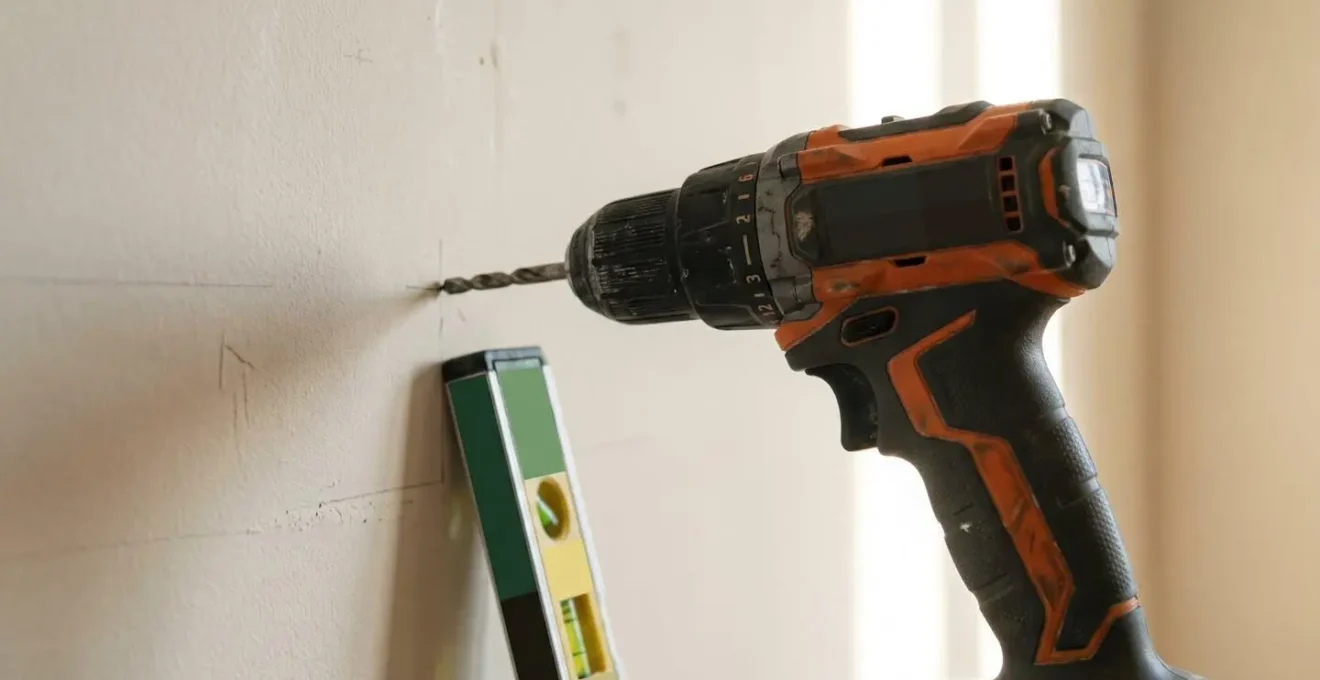
Most standard home insurance policies will NOT cover your DIY disaster; it depends entirely on having the right ‘accidental damage’ add-on and proving the incident was truly sudden and unforeseen.
- Accidental damage cover is an optional extra on over 70% of policies, not a given.
- Insurers draw a hard line between a genuine accident (dropping a tool) and poor workmanship or negligence (not checking for pipes before drilling).
- Damage from pets, wear and tear, or anything gradual is almost always excluded.
Recommendation: Before starting any home improvement project, locate your policy documents and confirm you have ‘accidental damage’ cover for both your building and its contents. It’s the most important prep work you’ll do.
There’s a unique satisfaction that comes with standing back to admire your own handiwork after a weekend of dedicated DIY. The new shelf, the freshly painted wall, the flat-pack furniture that actually looks like the picture on the box. But there’s also a cold dread familiar to many enthusiasts: the moment a simple task goes horribly wrong. The slip of a drill, the tumble of a paint can, or the sickening crunch from a mystery location. Your first thought is panic. Your second is often, « It’s okay, the insurance will cover it. » But will it?
Most advice on the topic will tell you to « check your policy » or that « it depends on the circumstances. » While true, this isn’t helpful when you’re trying to decide whether to even start a project. The real key isn’t just about reading the fine print after the fact; it’s about understanding the insurer’s mindset before you even pick up a tool. This mindset revolves around a crucial distinction: the difference between a genuine, one-off accident and an issue caused by negligence, poor workmanship, or predictable behaviour.
What if the secret to protecting your home wasn’t just having insurance, but knowing how to think like an insurer? This guide isn’t a list of loopholes. It’s a safety briefing. We’re going to deconstruct the most common household mishaps, from the classic red wine spill to the catastrophic water leak, and analyse them through the critical lens of an insurance assessor. By understanding the ‘why’ behind claim rejections, you can better prepare for the ‘what if’.
This article will walk you through a series of common household disasters, breaking down how an insurer views each scenario. By exploring these real-world examples, you will learn to assess your own risks and understand the vital preventative steps that truly protect your home and finances.
Summary: Before You Drill: Is That DIY Disaster Covered by Your Home Insurance?
- Red Wine on Cream Carpet: Professional Cleaning vs Replacement Claims?
- Smashed TV Screens: The Most Common Claim and How to Avoid Rejection?
- Chewed Furniture: Why Accidental Damage Usually Excludes ‘Chewing, Scratching or Tearing’?
- Toddlers and Paint: Is ‘Artistic Expression’ on Walls Considered Accidental Damage?
- Dropping a Saucepan on the Hob: Are Ceramic Hobs Covered?
- Why Standard Policies Won’t Pay When Your Child Smashes the 65-Inch TV?
- Stopcock Location: The 5-Minute Search That Can Save You £10,000 in Damage?
- Escape of Water: The #1 UK Insurance Claim and How to Prevent It?
Red Wine on Cream Carpet: Professional Cleaning vs Replacement Claims?
It’s the classic social gathering nightmare. A guest, a gesture, and a glass of red wine arcs gracefully through the air, landing squarely on your pristine cream carpet. After the initial flurry of activity with salt and soda water, the question arises: is this an insurance claim? The answer depends on a cold, hard calculation of cost versus consequence. Most insurers will cover this, assuming you have accidental damage cover. However, making a claim isn’t always the smartest financial move.
Your first consideration must be your policy excess. This is the amount you have to pay towards any claim, and for accidental damage, it’s often a hefty £250 or more. If a professional cleaning service can remove the stain for £150, making a claim is pointless; you’d pay the first £250 and the insurer would pay nothing. Even if the cleaning costs £300, claiming for the £50 difference is a poor trade. Why? Because a claim, no matter how small, can increase your premiums for the next three to five years and will likely nullify your no-claims bonus.
The decision to claim for something like a stained carpet requires a level of risk foresight. You must weigh the immediate cost of repair or cleaning against the long-term financial impact of a claim on your policy. A good rule of thumb: if the total cost of replacement or professional cleaning, minus your excess, is less than £500, it’s often more economical to absorb the cost yourself. Claiming should be reserved for damage that is truly catastrophic and financially unmanageable.
Smashed TV Screens: The Most Common Claim and How to Avoid Rejection?
A flying toy, a stumble during a console game, or a mishap while cleaning—the result is the same: a spiderweb of cracks across your brand-new, wall-mounted television. Damage to home electronics, particularly TVs, is one of the most frequent accidental damage claims. It’s also one of the most frequently misunderstood. The primary reason for rejection is simple: most people assume their standard contents insurance covers it. This is a dangerous assumption.
The hard truth is that very few standard policies include this protection by default. In fact, comprehensive research shows that only 22% of home contents insurance policies include accidental damage cover as standard. The vast majority—76%—offer it only as an optional, paid-for add-on. If you haven’t actively selected and paid for this extra cover, your claim will be rejected before it’s even assessed. This is the first and most important hurdle.
If you do have the correct cover, the key to a successful claim is proving the ‘sudden and unforeseen’ test. Insurers are wary of damage that could be from gradual wear or misuse. You must build a clear narrative. Take photos immediately, from all angles. Write down exactly what happened, when it happened, and who was there. Preserve any evidence, like the toy that caused the impact. This detailed causation chain demonstrates that the event was a single, definable accident, not the result of a long-standing issue. Providing a receipt to prove the TV’s value and age is also crucial for a smooth process.
Chewed Furniture: Why Accidental Damage Usually Excludes ‘Chewing, Scratching or Tearing’?
You come home to find your beloved puppy has celebrated your absence by re-sculpting the leg of a new armchair. It’s certainly damage, and it was accidental from your perspective, but your insurer will almost certainly disagree. This is where we encounter a core insurance principle that explains many common exclusions: moral hazard and predictable risk. Insurers exclude damage from pets for a very logical reason.
As one of the UK’s largest insurers, Aviva, states plainly in their guidance:
Damage caused by animals, like a pet chewing your furniture, isn’t usually covered.
– Aviva Insurance, Aviva UK Home Insurance Knowledge Centre – Accidental Damage Insurance Guide
The reasoning is that the risk of a pet causing damage is inherent to pet ownership. A puppy chewing, a cat scratching, or a bird soiling fabric are considered predictable behaviours, not ‘unforeseen’ accidents. Insuring this type of damage would create a moral hazard; if all pet damage were covered, owners might be less inclined to train their animals or protect their furniture, leading to an unsustainable number of claims. The risk is considered part of the ‘cost of ownership’ of a pet.
This same logic extends to other gradual processes. Damage from insects, vermin, rot, or mildew falls into the same category. These are not sudden events but developing situations that, in the insurer’s view, could have been prevented with regular maintenance and care. It’s a tough lesson, but it highlights the insurer’s focus on truly unexpected, one-off events rather than the foreseeable consequences of lifestyle choices or neglect.
Toddlers and Paint: Is ‘Artistic Expression’ on Walls Considered Accidental Damage?
You turn your back for a split second to answer the door, and in that moment, your toddler discovers an open can of paint. Their ‘artistic expression’ now covers the living room wall, the sofa, and a good portion of the carpet. Is this a DIY disaster or a valid insurance claim? In the eyes of most insurers, this is a textbook case of accidental damage, provided you have the right cover.
Unlike damage from pets, which is considered a predictable behaviour, the actions of young children are generally viewed as genuinely unforeseen and uncontrollable. They don’t have the same capacity for understanding consequences, so a child spilling paint is seen as a true accident. As a major comparison site clarifies:
Accidental damage insurance covers damage caused by children – such as kicking a football at the TV or knocking a drink onto the carpet.
– MoneySuperMarket
However, getting the claim approved still requires you to demonstrate that the event was sudden. Your job is to document a clear causation chain. Don’t clean up immediately. First, photograph everything: the unsecured paint can, the paint on the walls (a ‘buildings’ claim), the paint on the furniture (‘contents’), and the timeline of what you were doing. This proves it was a momentary lapse in supervision, not a case of leaving hazardous materials accessible for hours. A successful claim hinges on showing a split-second event, not a prolonged state of negligence.
When documenting the incident for your insurer, a structured approach is best:
- Photograph the scene: Capture the open paint can, the affected surfaces (walls, floors, furniture), and the context of the room.
- Establish the timeline: Note the exact time and what you were doing (e.g., « answering the front door at 2:15 PM »). Photo timestamps can support this.
- Separate the damage: Identify what is part of the building (walls, fixed flooring) and what are contents (sofa, rug, electronics). You may need to claim on two parts of your policy.
- Report promptly: Contact your insurer within 24 hours. This demonstrates you are acting in good faith and taking the situation seriously.
Dropping a Saucepan on the Hob: Are Ceramic Hobs Covered?
It’s a simple, clumsy moment. A heavy saucepan slips from your grasp and lands with a sickening crack on your sleek ceramic or glass induction hob. Now, one of your heating zones is unresponsive, or worse, the entire surface is a mosaic of shattered glass. As ceramic hobs are built into the kitchen counter, they are considered part of the building. The good news is that this type of breakage is one of the few accidents often covered as standard under your buildings insurance, even without a specific accidental damage add-on.
Most buildings policies include cover for accidental breakage of fixed glass, which extends to ceramic hobs. However, the success of your claim will depend entirely on the distinction between ‘cosmetic’ and ‘functional’ damage. A small chip or surface scratch on the edge that doesn’t affect the hob’s operation is unlikely to be covered. Insurers classify this as aesthetic damage; since the appliance still works perfectly, they will not pay to replace it.
The claim becomes valid when there is a ‘loss of function’. If the crack runs through a heating element, making it unsafe or unusable, or if the glass shatters completely, you have a strong case. This is no longer cosmetic; the appliance cannot perform its primary function. It’s crucial to be precise when you describe the damage to your insurer, focusing on the loss of function and any safety risks the damage presents.
This table, based on common policy interpretations from sources like the Post Office’s home insurance guidance, breaks down the difference:
| Damage Type | Description | Typical Coverage Status | Insurer Rationale |
|---|---|---|---|
| Cosmetic Chip | Small surface chip or scratch that does not affect any heating zones | Usually NOT covered | Hob remains fully functional; considered aesthetic damage only |
| Crack Through Heating Zone | Crack that renders one or more heating zones unsafe or unusable | Usually COVERED | Qualifies as ‘loss of function’ – hob cannot perform its designed purpose |
| Shattered Glass Surface | Multiple cracks or complete shattering making hob dangerous to use | COVERED | Clear accidental damage with complete loss of function and safety risk |
| Scratch from Cleaning | Gradual wear marks from regular use and cleaning over time | NOT covered | Classified as wear and tear, not sudden accidental damage |
Why Standard Policies Won’t Pay When Your Child Smashes the 65-Inch TV?
Let’s revisit the smashed TV scenario, but this time from a different angle. You’ve submitted your claim, complete with photos and a detailed account of your child’s impromptu game of indoor baseball. A week later, a letter arrives: « Claim Rejected. » The reason? You don’t have accidental damage cover. This situation is the single most common source of frustration and anger for policyholders, and it stems from a fundamental misunderstanding of what home insurance is.
A standard home insurance policy—for both buildings and contents—is designed to cover a specific list of large-scale perils: fire, storm, flood, subsidence, and theft. That’s its core function. It is not a catch-all warranty against anything bad happening to your property. Accidental damage is a completely separate category of risk, and insurers treat it as such.
The numbers are stark. An analysis of UK policies by consumer champion Which? found that only 31% of buildings insurance policies and 29% of contents insurance policies included full accidental damage cover as standard. This means for roughly 70% of homeowners, there is absolutely no cover for a smashed TV, a drill through a pipe, or a spilled can of paint unless they have proactively ticked a box and paid an extra premium. Insurers aren’t being deceptive; they are selling a specific product, and accidental damage is an optional upgrade, like leather seats in a car. If you don’t order it, you don’t get it.
If your claim is rejected and you believe it’s unfair (for instance, you believe you *do* have cover), you have a right to challenge it. Follow a clear process: ask the insurer for the specific clause they are using, compare it to your policy document, and if you still disagree, lodge a formal complaint. If you’re not satisfied after eight weeks, you can escalate the case to the Financial Ombudsman Service for an impartial review.
Key Takeaways
- ‘Accidental Damage’ Is a Choice: It’s an optional add-on for over 70% of policies. Don’t assume you have it; check your documents before you start any DIY project.
- ‘Sudden & Unforeseen’ Is Everything: Your claim must describe a single, unexpected event. Gradual damage, wear and tear, or predictable behaviours (like pets chewing) are always excluded.
- Prevention Is Your Best Policy: The best way to deal with a DIY disaster is to prevent it. Knowing your home’s systems, like where the stopcock is, is more valuable than any insurance policy.
Stopcock Location: The 5-Minute Search That Can Save You £10,000 in Damage?
We’ve talked a lot about what happens *after* a disaster. Now, let’s focus on the single most important piece of preventative action any DIY enthusiast or homeowner can take: locating and testing your internal stopcock. The main stopcock is the valve that controls the entire supply of mains water to your property. In the event of the disaster described in our title—drilling through a water pipe—being able to shut this off in seconds versus minutes can be the difference between a small, manageable repair and catastrophic flooding, destroyed ceilings, and a five-figure insurance claim.
Think of it as the fire extinguisher for water damage. You hope you never need it, but you absolutely must know where it is and that it works. Yet, a surprising number of homeowners have no idea. It’s often tucked away in a forgotten cupboard or behind years of clutter. Taking five minutes to locate it now can save you from utter panic in an emergency. This isn’t just good advice; it’s a fundamental part of your responsibility as a homeowner, and insurers will look more favourably on claims where you can demonstrate you took immediate action to mitigate the damage.
A well-maintained home, where safety features are known and accessible, is the ideal. It shows a level of care that aligns with the insurer’s view of a responsible policyholder. Make finding and maintaining your stopcock a priority project this weekend. It costs nothing, but its value is immense.
Your 5-Minute Water Emergency Action Plan
- LOCATE: Check the most common locations first: under the kitchen sink, in a utility cupboard near the front of the house, in a downstairs bathroom, or at the point where the water main visibly enters the property.
- LABEL: Once found, attach a bright, waterproof tag or label directly to the valve. This ensures it can be identified instantly by anyone in a high-stress emergency.
- TEST ANNUALLY: Gently turn the stopcock all the way off and then back on again once a year. This prevents the valve from seizing up with limescale. If it’s stuck, never force it—call a plumber.
- EDUCATE: Show every responsible person in your household—including teenagers—where the stopcock is and how to turn it off (usually clockwise). Practice the action together.
- DOCUMENT: Take a quick photo or video on your phone showing its location and how it operates. Save it to a shared family album or send it to your emergency contacts.
Escape of Water: The #1 UK Insurance Claim and How to Prevent It?
The scenario of drilling through a water pipe falls under a category that is the single biggest headache for UK insurers: ‘escape of water’. This isn’t just a common claim; it is the most frequent and one of the most expensive. Insurers pay out a staggering £1.8 million per day for escape of water claims, according to the Association of British Insurers. It accounts for more claims than fire and theft combined. This is why insurers are so rigorous when assessing these claims and why prevention is so critical.
Your standard buildings insurance will typically cover the resulting damage from an escape of water—the ruined ceiling, the warped flooring, the damaged electronics. This is the core purpose of the policy. However, several common and costly misconceptions can leave you with a massive, unexpected bill. One of the most significant is the confusion around ‘Trace and Access’ cover.
The Trace and Access Coverage Paradox
Imagine your water meter is spinning but there’s no visible leak. It’s hidden somewhere in the walls. ‘Trace and Access’ is an add-on cover designed to pay for the investigation to find the leak—this can include hiring specialists, using thermal cameras, and even knocking down walls or pulling up floors. It covers the cost of finding the problem and then making good on the damage caused by the search. However, what it crucially does NOT cover is the cost of repairing the actual leaking pipe itself. This is often deemed ‘maintenance’ and is excluded. It also doesn’t cover the water damage to your home, which is handled by the main ‘escape of water’ part of your policy. Many homeowners assume ‘Trace and Access’ is a single solution, only to discover it pays for the search but leaves them with the bill for the plumbing repair.
This paradox is a perfect example of the insurer’s mindset. They will pay for the unforeseen consequences (the damage) but not the failure of the object itself (the worn-out pipe), which they see as a maintenance issue. As a DIY enthusiast, your greatest tool is risk foresight. Before you drill, use a pipe detector. Before you install a new washing machine, check the hoses for wear. And most importantly, know where your stopcock is. Prevention, not claiming, is the ultimate mark of a skilled DIYer.
Your next step shouldn’t be starting a new project, but starting a new habit. Before you buy the materials or plan your weekend, pull out your insurance documents. Check for the words ‘Accidental Damage’ and ‘Trace and Access’. If they’re not there, make the call to add them. This ten-minute administrative task is the most valuable piece of DIY you’ll do all year.