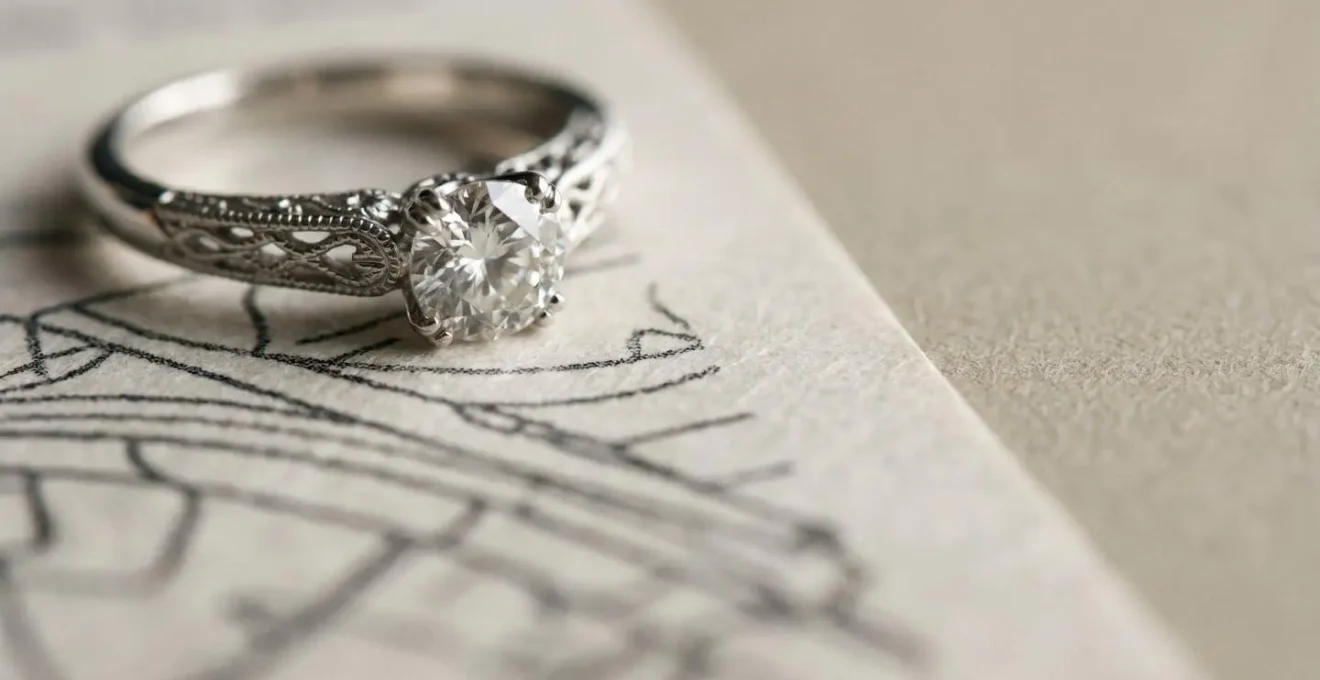
Relying on standard home insurance for a new engagement ring or valuable watch is a trap of false security; your policy’s single item limit means you are almost certainly underinsured from day one.
- Most policies cap individual items at £1,500-£2,000, far below the value of common luxury goods, making a full payout impossible.
- Proving ownership and value after a loss is your responsibility, and insurers scrutinise evidence far more rigorously than most people expect.
Recommendation: Immediately review your policy’s ‘single item limit’. For any item exceeding this value, you must either specify it on the policy with a formal valuation or purchase specialist standalone cover to be fully protected.
That moment of joy—a sparkling engagement ring on a finger, the cool weight of a fine inherited watch on a wrist—brings with it a new, quiet anxiety. The immediate advice from friends and family is always the same: « Make sure you put that on the insurance. » It sounds simple, a box-ticking exercise. You call your provider, add it to your home contents policy, and feel a sense of relief. But as a professional valuer, I see the devastating consequences of this simplistic approach every day. This feeling of security is often an illusion, built on a fundamental misunderstanding of how insurance policies actually work.
The truth is, standard contents insurance is designed for mass-produced, easily replaceable goods, not for unique, high-value items. It’s riddled with pitfalls like the ‘Single Item Limit’, a low ceiling on what an insurer will pay for any one object. Simply « adding » your £5,000 ring to a policy with a £1,500 limit doesn’t protect it. It merely documents it for a fraction of its worth. The real work of insurance isn’t just listing an item; it’s about building a robust, undeniable case for its value—a ‘corroboration package’—that an insurer cannot dispute when the worst happens. It’s about understanding the structural loopholes in your policy before you need to make a claim.
This guide will walk you through the mindset of a valuer. We will dissect the critical differences between home and specialist cover, establish a hierarchy of evidence to prove value even without a receipt, and explore how to navigate the policy nuances for everything from fine art to a high-end gaming PC. This is not just about avoiding underinsurance; it’s about ensuring the promises made by your policy are promises that will actually be kept.
To navigate this complex landscape, we will break down the key considerations and strategic choices you need to make. This article provides a structured path, from understanding your immediate risks with jewellery to creating a comprehensive digital inventory that guarantees your peace of mind.
Summary: A Valuer’s Roadmap to True Asset Protection
- Engagement Ring Insurance: Should You Specify It at Home or Buy Standalone Cover?
- No Receipt? How to Prove the Value of Inherited Jewellery After a Theft?
- Instruments at Home vs On Tour: When Do You Need Specialist Musician Cover?
- Fine Art at Home: Why Standard ‘Contents’ Won’t Cover a Damaged Oil Painting?
- Do You Need a Safe? How Installing One Affects Coverage for Specified Gold?
- Why Your £3,000 Gaming PC Might Exceed Your Policy’s Single Item Limit?
- Bank Statements and Photos: Secondary Evidence When the Receipt Is Gone?
- The Digital Inventory: How to Catalogue Your Home in 1 Hour to Guarantee Payouts?
Engagement Ring Insurance: Should You Specify It at Home or Buy Standalone Cover?
The average engagement ring represents a significant financial and emotional investment. Yet, most people unknowingly leave it dangerously exposed under standard home insurance. The core issue is the ‘Single Item Limit’ (SIL), a clause that caps the payout for any single lost, stolen, or damaged item. The problem is stark: the average engagement ring costs over $4,600, while the majority of home policies limit jewellery coverage to $1,500 or less. This creates an immediate and substantial gap in your protection.
You have two primary options to close this gap: adding the ring as a ‘specified item’ to your existing home policy (often called a rider or floater) or purchasing a ‘standalone’ policy from a specialist jewellery insurer. A rider is often cheaper upfront, but it comes with significant drawbacks. As experts from Jewelers Mutual note, « Filing a jewelry claim under your homeowners policy could increase your premiums or lead to policy cancellation. » This means a claim for your ring could jeopardise the insurance for your entire home. Furthermore, home policies often provide ‘named perils’ coverage, which is far more restrictive and typically excludes common scenarios like « mysterious disappearance » or losing a stone from its setting.
A standalone policy, while costing 1-2% of the ring’s value annually, offers superior, ‘all-risk’ protection. This includes accidental damage, mysterious loss, and worldwide coverage—essential for travel and honeymoons. The decision hinges on your risk tolerance and the true nature of the coverage you’re buying.
This table breaks down the fundamental differences between the two approaches, showing why the cheaper option is rarely the better one for an asset of such importance.
| Coverage Feature | Home Insurance Rider | Standalone Jewellery Policy |
|---|---|---|
| Coverage Type | Named perils only (fire, theft from home) | All-risk coverage (includes mysterious disappearance) |
| Typical Coverage Limit | $1,000 – $2,000 cap | Full appraised value with no caps |
| Impact on Other Premiums | Claim may raise homeowners rates | No impact on homeowners policy |
| International Coverage | Limited or excluded | Worldwide coverage included |
| Accidental Damage | Often excluded | Covered (including stone loss) |
| Annual Cost | Lower upfront (bundled) | 1-2% of ring value ($50-$200/year for $10k ring) |
No Receipt? How to Prove the Value of Inherited Jewellery After a Theft?
When an heirloom is stolen, the loss is more than financial. But for an insurance claim, finance is all that matters, and the burden of proof is entirely on you. Without an original receipt, many people believe a claim is impossible. This is incorrect. As a valuer, my role is to construct a compelling argument for an item’s worth using a hierarchy of evidence. An insurer is far more likely to accept a claim built from multiple layers of corroborating proof than one based on a single, weak piece of evidence. This is particularly true in the jewellery market, where as many as 40% of insurance claims involving gold items are found to be underinsured due to outdated or missing valuations.
The strongest possible evidence is a professional valuation from a registered valuer, conducted within the last three years. This document provides a detailed breakdown of materials, weights, measurements, and gemstone quality that is incredibly difficult for an insurer to dispute. It acts as the gold standard of proof. In its absence, you must build your case from other sources.
A combination of detailed, date-stamped photographs and the original purchase receipt is a strong second. If even that is missing, the case becomes about building a narrative. A notarised affidavit from family members detailing the item’s history (provenance), combined with old photos showing it being worn, can establish ownership and heritage. Even bank statements showing a purchase from a jeweller, cross-referenced with archived website pages from that time, can serve as supportive evidence. The key is to layer these elements to create a cohesive and believable ‘corroboration package’. A single, undated photo is weak; a photo combined with a bank statement and a family letter becomes a much stronger proposition.
The following represents the hierarchy of evidence a loss adjuster will consider, from bulletproof to merely supportive:
- Tier 1 (Bulletproof): Professional valuation from a registered valuer (e.g., NAJ) within the last 3 years, including detailed gemstone grading and manufacturing details.
- Tier 2 (Strong): Original purchase receipt combined with detailed photographs showing serial numbers and unique characteristics, with date-stamped metadata.
- Tier 3 (Moderate): A notarised family affidavit describing provenance, combined with historical photos of the original owner wearing the item.
- Tier 4 (Supportive): Bank statements showing the purchase, cross-referenced with archived product listings from the time of purchase.
- Tier 5 (Weak): Undated photographs alone or valuations over 5 years old.
Instruments at Home vs On Tour: When Do You Need Specialist Musician Cover?
For a professional musician, an instrument is not just a ‘valuable item’; it is a tool of the trade. This distinction is lost on standard home insurance policies, which view a £10,000 violin with the same logic as a £10,000 diamond necklace—an item stored securely at home. This creates a critical coverage gap because the primary risks to an instrument occur when it is in transit or in use, two states that home insurance is not designed to cover. An instrument is most vulnerable when it is being loaded into a tour van, checked as airline baggage, or left backstage at a venue.
Specialist musician insurance is built around understanding these different ‘risk states’. As a case study from Distinguished Programs highlights, a standard policy fails musicians across three scenarios:
The Three Risk States of Professional Musical Instruments
Distinguished Programs documented how standard home insurance fails musicians across three critical scenarios: ‘In Transit’ (instruments damaged in tour van or airline cargo holds), ‘In Use’ (professional liability during performances, often excluding business equipment entirely), and ‘In Storage’ (warehouse or venue backstage theft). Their analysis showed that specialist policies extend coverage to all three states, while homeowners policies typically cover only ‘at-home storage’ and exclude professional use entirely, leaving touring musicians critically exposed during the highest-risk periods of their work.
Furthermore, standard policies almost universally contain a ‘business use’ exclusion. If you earn money using your instrument, any claim for damage or theft—even if it occurs at home—can be denied on the grounds that it is commercial equipment. Specialist policies remove this exclusion and add other vital protections, such as covering the cost of a rental instrument if yours is being repaired, or public liability cover in case your equipment injures someone during a performance.
The cost for this comprehensive protection is often surprisingly reasonable. For example, a specialist policy can provide extensive coverage for a significant value of instruments with no deductible. Attempting to save money by relying on a home policy is a false economy that exposes a musician’s most vital asset to unacceptable levels of risk precisely when it is most in use.
Fine Art at Home: Why Standard ‘Contents’ Won’t Cover a Damaged Oil Painting?
Hanging a piece of fine art on your wall introduces a type of value into your home that standard contents insurance is conceptually unequipped to handle. The entire model of home insurance is built on the principle of ‘replacement value’—if your television is destroyed, the policy pays for a new, equivalent television. But a unique oil painting or sculpture cannot be replaced. This fundamental difference is where standard coverage fails catastrophically.
As one insurance industry analysis succinctly puts it, « Standard insurance is built on replacement. Fine art is irreplaceable. Specialist cover focuses on the cost of expert restoration and the subsequent loss of value post-restoration, two concepts foreign to home contents insurance. » Imagine a small tear in a valuable canvas. A home policy might offer a fraction of the painting’s worth based on its single item limit. A specialist fine art policy, however, is designed for this exact scenario. It will cover the cost of flying in a top-tier restorer, the intricate work of repair, and—crucially—the ‘loss of value’ depreciation. A restored painting, no matter how expertly repaired, is worth less to the art market than a pristine original. Specialist insurance covers this financial loss, a nuance that is completely absent from a standard policy.
This is compounded by the surprisingly low coverage limits on general policies. According to research from Defaqto, 52% of contents insurance policies in the UK cap total valuables coverage at £30,000 or less, with many having single item limits of just a few thousand pounds. This is often insufficient for even a single piece of modest artwork. Relying on such a policy for fine art is not just underinsurance; it’s a misunderstanding of the nature of the asset itself. You are insuring an irreplaceable object with a policy designed for disposable goods.
True protection for art requires a policy that acknowledges its uniqueness. This means agreed-value coverage (where the payout amount is fixed upfront), cover for restoration costs, and compensation for any resulting depreciation in market value. Anything less is simply not fit for purpose.
Do You Need a Safe? How Installing One Affects Coverage for Specified Gold?
For owners of significant quantities of gold, bullion, or high-value jewellery, insurers will often mandate the use of a home safe as a condition of coverage. However, simply buying and installing any safe is not enough; in fact, doing it wrong can be worse than having no safe at all. Insurers have very specific requirements, and failure to comply with what’s known as the ‘safe warranty’ can be grounds for denying a claim entirely, even if the items were stolen from the locked safe.
The first step is checking the policy wording for the required safe grade. Safes are certified with a European standard (e.g., EN 1143-1 Grade 1, 2, 3) which corresponds to a specific ‘cash rating’ or ‘valuables rating’. An insurer will require a certain grade based on the total value of the items you are storing. Using a lower-grade safe than specified in your policy immediately voids your coverage for those items. The average UK engagement ring often falls right at the threshold where insurers start asking questions about security.
Secondly, the installation is as important as the safe itself. Most warranties require the safe to be professionally installed and bolted to a solid concrete floor or structural wall. A safe that can be carried out of the house by burglars is considered unsecured. You must keep the professional installation certificate as proof of compliance. Finally, there’s the issue of ‘negligent security’. If you leave the safe keys in an obvious place (like a kitchen drawer) or write the code on a piece of paper kept nearby, an insurer can argue you facilitated the theft and reduce or deny the claim. Proactively photographing the installed safe, its certification label, and the bolt fixings—and sending this to your insurer—can pre-emptively validate your compliance and even lead to premium discounts.
Your Action Plan: Safe Warranty Compliance Checklist
- Verify Safe Grade Requirement: Check your policy for the specific safe grade (e.g., Grade 2 EN 1143-1) required for your insured gold’s value.
- Mandate Professional Installation: Ensure the safe is installed by a certified professional and bolted as per manufacturer specs; keep the installation certificate.
- Secure Keys and Codes: Never store keys on the property or write down codes; insurers can invoke a negligence clause if they aid burglars.
- Submit Photographic Evidence: Take dated photos of the installed safe, its grade label, and bolt fixings, and submit them to your insurer.
- Request Premium Discount: Once compliance is verified, formally request a premium reduction in writing, citing your enhanced security measures.
Why Your £3,000 Gaming PC Might Exceed Your Policy’s Single Item Limit?
A high-end gaming PC is a classic example of an item that falls into a grey area for home insurance, often leading to major shortfalls during a claim. A custom-built rig with a top-tier graphics card, CPU, and premium peripherals can easily total £3,000 or more. The owner sees it as a single unit: « my computer. » However, if your policy’s single item limit is £1,500, listing « 1x Gaming PC: £3,000 » on your claim will result in a payout capped at £1,500, leaving you with a massive £1,500 loss.
This is a classic ‘structural loophole’ in standard insurance. However, there is a valuation strategy to navigate it. Instead of viewing the PC as a single item, a valuer would advise breaking it down into its constituent, high-value components. A £1,200 GPU, a £500 CPU, a £600 monitor, and a £700 bundle of motherboard/RAM/SSD are all individually below the £1,500 single item limit. By cataloguing and valuing them separately, you can achieve full coverage for the entire system without technically exceeding the SIL for any *one* item. This requires meticulous documentation—keeping receipts for each component is vital—but it is a perfectly valid way to structure your inventory for maximum protection.
This component-based strategy transforms an almost certain claims shortfall into a fully covered loss. It is a prime example of how thinking like a valuer—deconstructing an asset into its core parts—can overcome the rigid, and often illogical, structures of a standard insurance policy.
The following table illustrates the financial outcome of these two distinct valuation strategies when faced with a typical £1,500 Single Item Limit.
| Valuation Approach | Total PC Value: £3,000 | Outcome if Single Item Limit = £1,500 |
|---|---|---|
| Strategy A: List as Single Item | 1x Gaming PC: £3,000 | ❌ Claim capped at £1,500 (£1,500 shortfall) |
| Strategy B: Component Breakdown | GPU: £1,200 CPU: £500 Monitor: £600 Motherboard/RAM/SSD: £700 |
✅ All components individually under £1,500 limit; full coverage achieved without exceeding threshold (assuming itemized listing) |
| Critical Exclusions (Both Strategies) | Software licenses, Steam library, digital assets | ⚠️ Not covered under either approach; consider specialist gadget insurance for intangible value |
Bank Statements and Photos: Secondary Evidence When the Receipt Is Gone?
In the aftermath of a theft or fire, the last thing on your mind is paperwork. But when you file a claim, the insurer’s first request will be for proof of ownership and value. With the average home insurance claim cost rising, insurers are scrutinising documentation more than ever. Indeed, with the average claim cost reaching $18,311 in recent years, the financial stakes are high for providers. So, what happens when the original receipt for a valuable camera or watch is long gone? You must build a ‘corroboration package’ using secondary evidence.
No single piece of secondary evidence is as strong as an original receipt, but layering multiple pieces together can create a compelling and difficult-to-dispute case. This is the ‘Corroboration Pyramid’: each layer supports the others. It starts with establishing the item’s existence and ends with a complete, time-stamped narrative of your ownership.
The process is methodical:
- Layer 1 – Establish Existence: High-resolution photos are the foundation. They must be clear and detailed, capturing the item from all angles, and crucially, showing any serial numbers, hallmarks, or unique marks. A photo with a ruler for scale is even better.
- Layer 2 – Prove Purchase: A bank or credit card statement showing the transaction to a specific retailer on a specific date proves a purchase was made. It doesn’t prove *what* was bought, but it’s a vital link in the chain.
- Layer 3 – Contextual Verification: This is where digital tools become invaluable. Using the Wayback Machine (archive.org), you can often find an archived version of the retailer’s product page from the date of your purchase, showing the item’s description, specifications, and price, which should match your bank statement.
- Layer 4 – Metadata Authentication: The EXIF data embedded in your digital photos contains un-forgeable information like the date the photo was taken and the device used. This acts as a digital notary, time-stamping your possession of the item.
- Layer 5 – Create a Timeline: Compile a collection of dated photos of you with or using the item over time (e.g., wearing the watch on holiday, using the camera at a family event). This creates a visual chain of provenance.
When submitted together, this package presents a powerful, multi-faceted argument. It tells a story that is far more convincing than a simple declaration of ownership, transforming weak individual proofs into a strong, unified piece of evidence.
Key Takeaways
- Master the Evidence Hierarchy: Your ability to prove an item’s value depends on the quality of your evidence. A recent professional valuation is gold-standard; layered secondary proof is the next best thing.
- Exploit Structural Loopholes: Understand how your policy is structured. Deconstructing a ‘system’ like a PC into its ‘components’ can be a valid strategy to avoid breaching the single item limit.
- Match the Cover to the Asset: Standard insurance is for replaceable items. For unique assets like art or professional tools like instruments, specialist ‘all-risk’ cover is non-negotiable.
The Digital Inventory: How to Catalogue Your Home in 1 Hour to Guarantee Payouts?
The single most powerful action you can take to guarantee a smooth and successful insurance claim is to create a comprehensive home inventory. Yet, most people never do it, imagining it to be a monumental, weekend-long task. This is a mistake. Using a strategic approach, you can create a robust, legally sound digital inventory in about an hour. The key is to abandon the idea of a perfect, line-by-line spreadsheet from the start and instead focus on a ‘high-risk first’ protocol that captures the most critical information quickly.
This method prioritises the 20% of your items that represent 80% of the financial risk. It’s about working smart, using video to capture volume and focusing detailed efforts only on high-value items. An out-of-date or non-existent inventory is one of the primary reasons claims are reduced or denied. This 60-minute investment provides a time-stamped, cloud-saved, and undeniable record of your possessions that will prove invaluable in a time of crisis.
The goal is to create an ‘evidence locker’ in the cloud that you can access from anywhere, containing a mixture of video walkthroughs for general contents and specific, detailed files for anything that might exceed your policy’s single item limit.
Your Action Plan: The 80/20 High-Risk First Inventory Method
- Minutes 0-15 (High-Value First): Start with jewellery, watches, and electronics. Photograph each item with its serial number visible, verbally stating the make and model if recording a video.
- Minutes 15-30 (Room Sweep Video): Take a slow, narrated video of each room. Open cupboards and drawers, verbally describing expensive items. This creates a time-stamped baseline faster than any spreadsheet.
- Minutes 30-45 (Create Cloud Evidence Locker): Immediately upload all photos and videos to secure cloud storage (e.g., Google Drive, Dropbox). Create a folder for each high-value item.
- Minutes 45-55 (Establish Replacement Values): For key items without receipts, do a quick online search for the current replacement cost and note it in a simple document within your evidence locker.
- Minutes 55-60 (3-2-1 Backup): Ensure your inventory exists in 3 copies, on 2 different media types, with 1 copy stored off-site (the cloud counts as your off-site copy).
Ultimately, protecting your valuables is not a passive activity. It requires a proactive, strategic mindset. By thinking like a valuer, you shift from simply buying a policy to actively managing your risk. Review your single item limits, build your evidence packages before you need them, and invest in specialist cover where necessary. These actions are the difference between having a piece of paper and having true peace of mind.