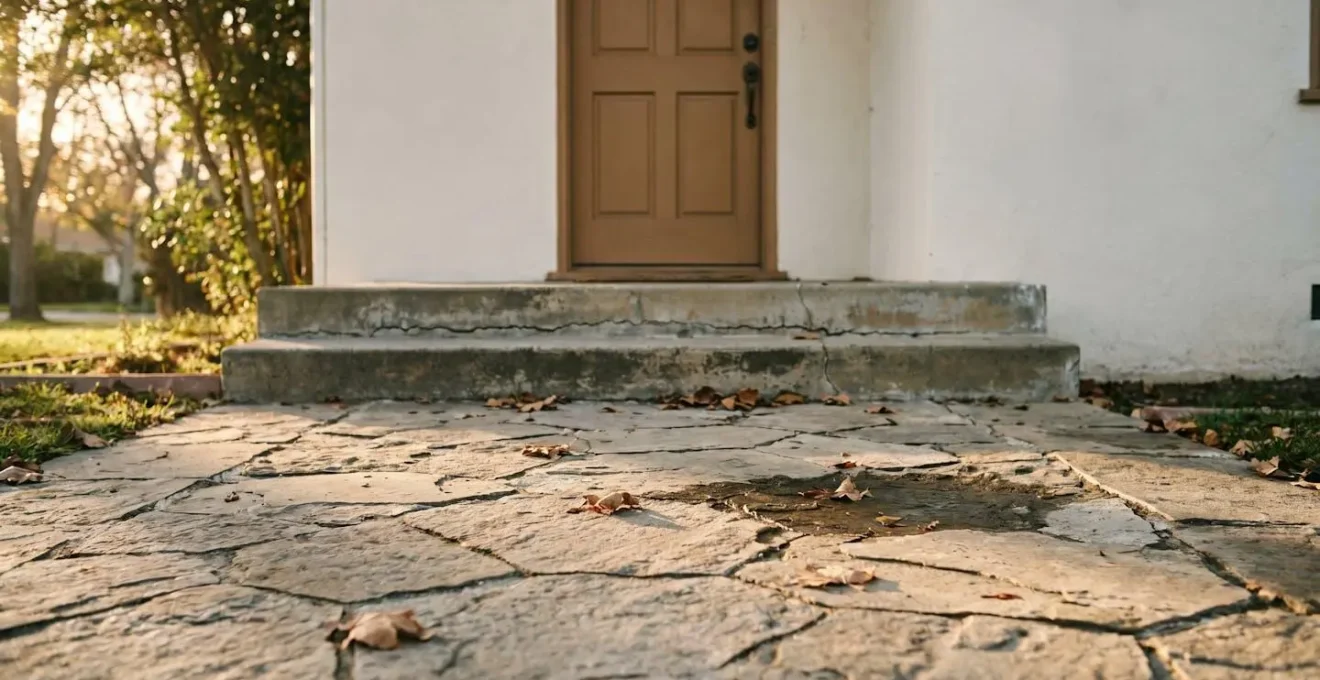
A simple trip on your property can escalate into a complex legal claim; understanding the principle of « reasonable care » is your best defence.
- Your legal duty varies significantly depending on the visitor, with different expectations for children compared to professional tradespeople.
- Documenting inspections and repairs is not just good practice; it is crucial evidence to prove you acted responsibly in the eyes of the law.
Recommendation: Regularly audit your property for foreseeable hazards and ensure your home insurance includes at least £2 million in public liability cover.
The scenario is a homeowner’s nightmare. A delivery driver misses a step on your slightly uneven garden path, takes a fall, and a few weeks later, a solicitor’s letter arrives. This is the reality of occupiers’ liability, a legal concept that holds property owners responsible for the safety of their visitors. Many believe that keeping a perfectly pristine property is the only way to avoid a lawsuit. They focus on fixing every cracked paving slab and replacing every worn-out doormat, an often impossible standard to maintain.
However, from a defence solicitor’s perspective, the law is more nuanced. The courts are not looking for perfection. Instead, they apply a test of « reasonableness. » The crucial question is not « Was your property perfectly safe? » but rather « Did you take reasonable care to ensure your visitor was reasonably safe for the purpose of their visit? » This distinction is the core of your defence.
This article will not give you a simple checklist of hazards to fix. Instead, it will teach you to think like a lawyer. We will explore the legal principles that govern these claims, from the high-risk areas within your home to the different types of visitors and the specific duties you owe them. By understanding the legal framework, you can move from a state of anxiety to one of proactive, informed risk management, protecting both your visitors and your financial future.
This guide breaks down the key aspects of the Occupiers’ Liability Act from a practical, homeowner-focused perspective. The following sections will equip you with the knowledge to assess your risks and understand your legal obligations.
Contents: A Homeowner’s Guide to Navigating Liability
- Why Loose Rugs and Stair Carpets Are the #1 Cause of Domestic Injury Claims?
- Motion Sensor Lights: How Poor Visibility Increases Your Liability Risk?
- The ‘Wet Floor’ Sign: Do Homeowners Need to Warn Tradespeople of Risks?
- Trampolines and Liability: What Happens if a Neighbour’s Child Gets Hurt?
- Rotting Decking: The Hidden Trap That Could Cost You £50,000 in Compensation
- Why Your Policy Must Cover Up to £2 Million in Legal Liability Costs?
- The Loose Slate: Are You Liable if Storm Debris Hits Your Neighbour’s Conservatory?
- Property Owner’s Liability: Are You Covered if the Postman Slips on Your Driveway?
Why Loose Rugs and Stair Carpets Are the #1 Cause of Domestic Injury Claims?
Indoors, the most unassuming items often pose the greatest threat. Loose rugs and worn stair carpets are prime examples of foreseeable hazards. From a legal standpoint, « foreseeability » is a critical concept. If a risk is common and well-known, an occupier is expected to be aware of it and take reasonable steps to mitigate it. The sheer volume of incidents makes this risk impossible to ignore. In the US, for example, research has shown that an estimated 37,991 adults aged 65 and older are treated in emergency departments each year for fall injuries associated with rugs and carpets.
The danger lies in their tendency to bunch, slip, or have curled edges, creating a significant trip hazard for the unaware visitor, from a guest to a tradesperson. While a younger, able-bodied person might recover from a stumble, the same fall can cause a catastrophic injury to an older adult or someone with mobility issues. The courts will consider the nature of potential visitors when assessing what is « reasonable. »
A simple rug-gripper mat, double-sided tape, or the prompt repair of a frayed carpet edge are not just practical safety measures; they are demonstrations of reasonable care. In the event of a claim, being able to show you have identified this common hazard and implemented a low-cost, effective solution is a powerful piece of evidence in your favour. Ignoring such a well-documented risk, conversely, can be interpreted as a failure to meet your duty of care.
Motion Sensor Lights: How Poor Visibility Increases Your Liability Risk?
The duty of care you owe to visitors extends beyond the fabric of your property to the conditions you provide. Poor visibility is a significant factor in many slip and trip claims, as it prevents a visitor from identifying and avoiding a hazard that might be obvious in daylight. An uneven paving stone, a garden hose left across a path, or a single step can become an invisible trap in the dark. This is where adequate lighting transitions from a convenience to a legal necessity.
As the image illustrates, the transition from daylight to darkness creates zones of high risk. Installing motion-sensor lights along pathways, near entrances, and around steps is a proactive and reasonable measure. It ensures that light is provided when needed, making visitors aware of the ground conditions. This is particularly important for lawful visitors you expect after dark, such as evening guests or late-working tradespeople. A court would likely view the failure to illuminate a known hazardous area as a breach of duty.
From a defence perspective, the presence of functional, well-placed outdoor lighting serves as strong evidence of your commitment to visitor safety. It demonstrates foresight and a practical attempt to remove a key contributing factor to accidents. The small investment in a motion sensor light system can pay significant dividends by preventing an accident or by forming a key part of your defence should a claim arise.
The ‘Wet Floor’ Sign: Do Homeowners Need to Warn Tradespeople of Risks?
The duty of care owed to visitors is not a one-size-fits-all obligation. The law, specifically the Occupiers’ Liability Act 1957, makes a crucial distinction for professional visitors like electricians, plumbers, or chimney sweeps. While you must still provide a safe environment, the law assumes these specialists will be aware of and guard against risks inherent to their trade. The foundational principle is outlined directly in the legislation.
As Section 2(2) of the Occupiers’ Liability Act 1957 states, the core duty is to take reasonable care for the visitor’s safety. However, the courts have refined this, particularly for skilled professionals. A key legal precedent that every homeowner should understand is the case of *Roles v Nathan (1963)*. It established that an occupier is not liable for injuries to a tradesperson if the injury arises from a risk the professional should have been able to identify and manage. In that case, chimney sweeps unfortunately died from carbon monoxide poisoning, a risk the court deemed inherent to their work which they should have guarded against. This « assumption of risk » principle is a cornerstone of occupiers’ liability defence, and legal scholars frequently cite this case to illustrate the nuanced duty of care.
The occupier must take such care as in all the circumstances of the case is reasonable to see that the visitor will be reasonably safe in using the premises for the purposes for which he is invited or permitted by the occupier to be there.
– Occupiers’ Liability Act 1957, Section 2(2)
This means you are not expected to warn an electrician about the dangers of live wiring or a roofer about the risks of working at height. However, this does not give you a free pass. Your duty is to warn them of any unusual or hidden dangers not related to their specific job. For example, you must warn a plumber about a rotten floorboard you know exists in the bathroom, as that is not a risk inherent to plumbing work itself. The key is distinguishing between risks related to the professional’s craft and unrelated dangers on your property.
Case Study: Roles v Nathan (1963) – Professional Visitor Assumption of Risk
In Roles v Nathan (1963), two chimney sweeps died from carbon monoxide poisoning while working on a boiler. The Court of Appeal held there was no breach of duty because the occupier could expect the sweeps, as specialists, to guard against the particular danger inherent in their work. This case established the principle that professionals are expected to appreciate and guard against risks incidental to their profession.
Trampolines and Liability: What Happens if a Neighbour’s Child Gets Hurt?
Certain features on a property act as a powerful magnet for children, and the law recognises this. Trampolines, swimming pools, and even treehouses fall into a special category known as « allurements. » The duty of care owed to child visitors (or even child trespassers, in some cases) is significantly higher than that owed to adults. This is because children cannot be expected to recognise or appreciate the dangers that would be obvious to an adult. The foreseeability of injury is extremely high.
The statistics are stark. According to the Royal Society for the Prevention of Accidents (RoSPA), trampolines are a leading cause of childhood injuries, with UK hospitals treating around 13,000 cases yearly. While many of these are minor, a portion result in serious, life-altering harm. If a neighbour’s child is injured on your trampoline, even if they were uninvited, you could be held liable.
From a defence standpoint, demonstrating robust safety measures is paramount. This goes far beyond a simple warning. Reasonable steps would include:
- Ensuring the trampoline has a safety net in good condition.
- Implementing clear rules for use (e.g., one person at a time, no somersaults).
- Supervising use whenever possible.
- Securing the trampoline to prevent unsupervised access, for example, by removing the ladder or having a fenced-off garden.
Failure to take these steps can be viewed as negligence, as the high risk of injury from trampoline use is widely known. Your home insurance policy may also have specific clauses or exclusions related to such equipment, which should be reviewed carefully.
Rotting Decking: The Hidden Trap That Could Cost You £50,000 in Compensation
Unlike an obvious trip hazard like a misplaced toy, some of the most dangerous defects on a property are hidden. Rotting decking is a classic example of a « latent defect »—a structural weakness that is not immediately apparent upon casual inspection. A deck may look perfectly fine on the surface, but underneath, moisture and time can weaken the timber to the point of collapse. When a visitor steps on it, the result can be a sudden, serious fall leading to significant injuries and a very costly compensation claim.
The law does not expect homeowners to be structural engineers, but it does expect them to undertake reasonable inspections and maintenance. Poking a screwdriver into supporting joists to check for soft, rotten wood or noticing areas that remain damp and discoloured are simple checks a homeowner can and should perform. Ignoring these warning signs can be fatal to a legal defence. The key is to shift from a passive to a proactive mindset. Your best defence against a claim involving a latent defect is to prove you had a system for looking for it.
This is where meticulous record-keeping becomes your most powerful legal tool. Keeping a log of when you inspected the deck, what treatments you applied, and any repairs you made creates a paper trail that demonstrates your diligence. This documentation can prove that you fulfilled your duty of care, even if a defect ultimately caused an injury. Without it, you are left arguing that you « thought it was fine, » which is a much weaker position.
Your Defence Blueprint: Proactive Maintenance Documentation
- Conduct quarterly visual inspections of high-traffic areas including decking, pathways, and stairs, documenting with timestamped photographs.
- Maintain a simple maintenance log (digital or physical) recording dates of inspections, treatments applied, and repairs completed.
- Retain all contractor invoices and emails as evidence of professional assessments and repair work undertaken.
- After any professional installation or repair (e.g., carpet fitting, decking treatment), photograph the completed work as baseline evidence of due care.
- Store all documentation in a dedicated file for immediate access in the event of an incident or claim.
Why Your Policy Must Cover Up to £2 Million in Legal Liability Costs?
When selecting home insurance, many people focus on the buildings and contents cover, overlooking the crucial element of Public Liability, also known as Property Owner’s Liability. This is the part of your policy that responds if you are sued for injury or property damage. A common question is how much cover is enough, and while policies offer various levels, a minimum of £2 million is the standard recommendation for a reason.
A figure like £2 million may seem astronomical, but it reflects the potential costs of a « catastrophic » claim. Imagine a visitor suffers a severe fall resulting in permanent spinal injury. The compensation award (known as « quantum ») would need to cover multiple heads of loss, including:
- Pain, Suffering, and Loss of Amenity: Compensation for the injury itself.
- Loss of Earnings: Potentially for the rest of their working life if they cannot return to their job.
- Cost of Care: The expense of professional carers, which can run to hundreds of thousands of pounds per year.
- Home Adaptations: The cost of modifying their home for wheelchair access and other needs.
- Specialist Equipment: Including mobility aids and adapted vehicles.
On top of this substantial compensation award, the insurer must also cover the legal costs for both the claimant and your defence. These legal fees alone can easily run into six figures in a complex, high-value case. When all these elements are combined, it becomes clear how a claim can approach or even exceed the £2 million mark. Insufficient cover could leave you personally liable for the shortfall, risking your home and other assets.
The Loose Slate: Are You Liable if Storm Debris Hits Your Neighbour’s Conservatory?
Your liability as a property owner is not confined to people on your land; it can extend to damage caused to neighbouring properties. A common scenario involves debris, such as a roof slate or a garden fence panel, being dislodged during a storm and damaging a neighbour’s property, like a car or a conservatory. In these situations, your neighbour’s first recourse may be to claim against you, but liability is not automatic.
The legal question will hinge on negligence versus an « Act of God. » An « Act of God » is a legal term for an event caused by natural forces without any human intervention, which could not have been foreseen or realistically guarded against. If an unprecedented, exceptionally violent storm causes damage, it may be deemed an Act of God, and you may not be held liable. Your neighbour would then need to claim on their own insurance.
However, the « Act of God » defence will fail if there was pre-existing negligence on your part. If your roof was in a state of disrepair, with visibly loose slates that you had failed to fix, you cannot blame the storm. In this case, the storm was merely the final trigger for a failure that was waiting to happen. A court would likely find that it was foreseeable that a poorly maintained roof would lose slates in strong winds, even if the storm was not of « unprecedented » severity. This again underscores the importance of regular property maintenance and, crucially, documenting it. Proof of a recent roof inspection could be your key defence in such a claim.
Key Takeaways
- Liability hinges on the legal test of « reasonableness, » not on achieving a perfectly hazard-free property.
- The duty of care you owe is not uniform; it varies for different types of visitors, such as children and skilled tradespeople.
- Proactive inspection, maintenance, and, most importantly, detailed documentation are your strongest defence tools in the event of a claim.
Property Owner’s Liability: Are You Covered if the Postman Slips on Your Driveway?
Every person who sets foot on your property, from the postman and delivery drivers to invited guests and even, in some cases, trespassers, is owed a duty of care. Your driveway, path, and steps are the front line in occupiers’ liability. Icy conditions in winter, moss growth in damp weather, or a loose paving stone can all create the conditions for an accident and a subsequent legal claim. Your home insurance policy is your financial shield against such events, but only if the Property Owner’s Liability section is adequate.
This coverage is designed to pay for the compensation and legal costs if you are found legally liable for injury to a third party or damage to their property. It covers the exact scenarios discussed throughout this article: the courier who trips on a cracked step, the guest who slips on a wet floor, or the neighbour’s child injured by a falling garden ornament. Without this insurance, you would have to fund your own legal defence and pay any settlement or court award out of your own pocket, which could be financially ruinous.
Ultimately, navigating the world of occupiers’ liability is a two-pronged strategy. The first prong is proactive risk management: regularly inspecting your property, fixing foreseeable hazards, and documenting your actions. The second, equally important prong is ensuring you have a robust financial safety net. This means not just having insurance, but understanding what it covers and ensuring the limit is sufficient for a worst-case scenario. Taking these steps provides peace of mind, knowing you have acted responsibly to protect both your visitors and your assets.
The logical next step for any responsible homeowner is to review your current home insurance documents. Check the « Public Liability » or « Property Owner’s Liability » section and confirm your level of cover is at least £2 million before a simple accident becomes a complex legal and financial problem.