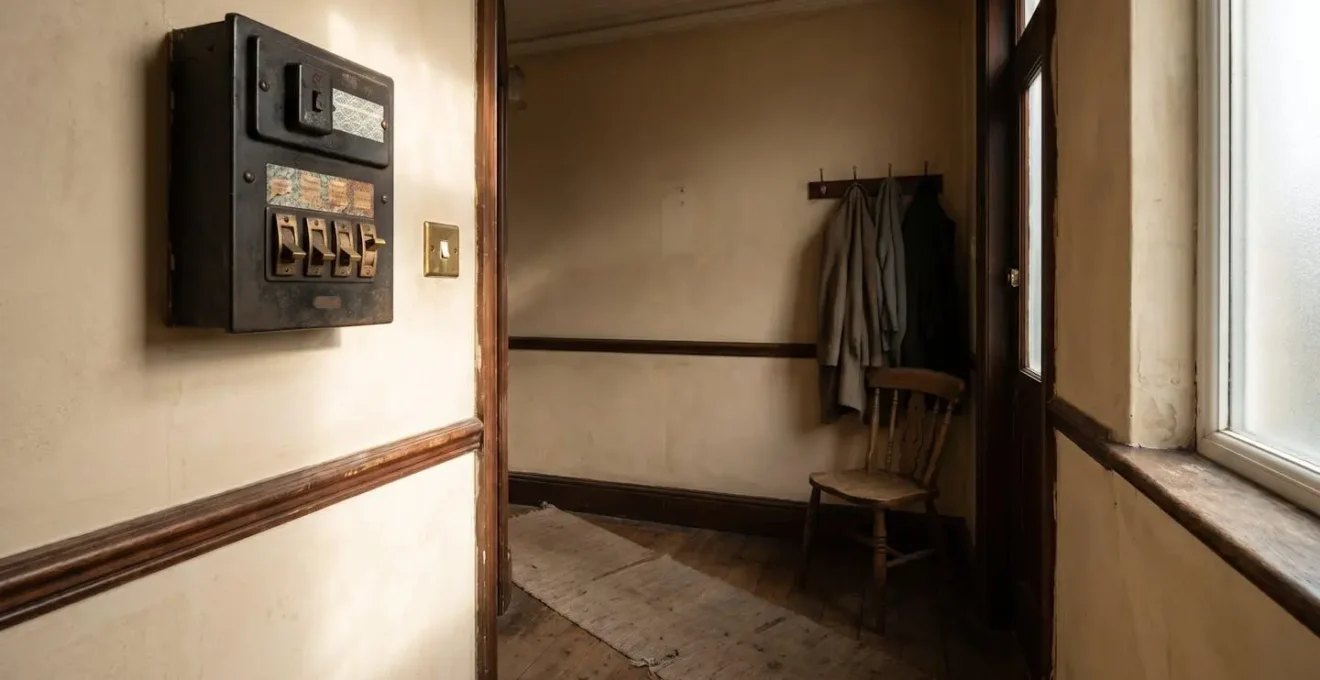
The uncomfortable truth is that your 1930s home’s original wiring doesn’t just pose a fire risk; it could make your home insurance policy worthless when you need it most.
- Insurers increasingly scrutinise ‘modern perils’ like e-bike charging and tumble dryers, which older electrical systems were never designed to handle.
- An up-to-date Electrical Installation Condition Report (EICR) is your primary defence, serving as irrefutable proof that you’ve taken ‘reasonable care’ of your property’s electrical safety.
Recommendation: Stop viewing electrical work as a maintenance cost and start seeing it as a crucial investment in your home’s fundamental insurability.
There’s an undeniable charm to a 1930s house. The bay windows, the solid construction, the sense of history. But as a qualified electrician, I know that behind that character often lurks a significant, hidden anxiety for homeowners: the original wiring. You’ve likely heard the general warnings about fire risk and the advice to « get it checked ». This is, of course, sound advice.
However, the conversation we rarely have is not just about physical safety, but about financial survival. What if the real ticking time bomb isn’t just the risk of a fire, but the risk of your insurance company refusing to pay out because the electrical installation was deemed inadequate? The goalposts have moved. Insurers are no longer just looking at the cause of a fire; they are looking for evidence that you, the homeowner, took ‘reasonable care’ to prevent it.
This article moves beyond generic safety tips. We’re going to put on an insurer’s hat and dissect the specific electrical hazards that can invalidate your policy. We will explore why a modern consumer unit is about more than just convenience and how the rise of new technology, from e-bikes to tumble dryers, has changed your home’s entire risk profile. The key takeaway is this: in the modern insurance landscape, an EICR isn’t just a piece of paper. It’s your single most important piece of evidence.
This guide will walk you through the key electrical risks from an insurer’s perspective, providing actionable insights to protect both your home and your financial future. Below is a summary of the critical areas we will cover.
Summary: EICR Certificates and Old Wiring: A Homeowner’s Guide to Insurability
- Rewireable Fuses vs Circuit Breakers: Why Insurers Hate the Old Wire Fuses?
- The Lint Filter Danger: Why Tumble Dryers Are the Leading Cause of Appliance Fires?
- E-Bikes and Scooters: The New Fire Risk Voiding Policies in Flats?
- Daisy-Chaining Danger: How Overloading Sockets Can Lead to a Rejected Claim?
- Interlinked Alarms: The New Legal Standard for Fire Detection in Some UK Regions?
- Power to the Shed: Are the Electrics in Your Home Office Covered?
- Terraced Housing Risks: What Happens if Your Neighbour’s Fire Spreads to Your Home?
- Fire, Flood, and Heave: How to Survive the Financial Shock of a Major Peril
Rewireable Fuses vs Circuit Breakers: Why Insurers Hate the Old Wire Fuses?
If your home still has a fuse box with a pull-out carrier and fuse wire, you have what is essentially a 1930s safety device trying to protect a 21st-century home. These rewireable fuses are a major red flag for insurers for one simple reason: they are fundamentally unreliable. They rely on the correct thickness of fuse wire being used for a repair—a task often done incorrectly by homeowners, using wire that’s too thick, which won’t blow when it should during a fault current. This effectively removes the primary safety feature.
In contrast, modern consumer units use circuit breakers (MCBs) and Residual Current Devices (RCDs). An MCB is precisely calibrated and trips instantly at a specific overload, and it can’t be tampered with. An RCD is even more crucial; it detects tiny leakages of current to earth—the kind that can cause a fatal electric shock or a fire—and cuts the power in milliseconds. The lack of RCD protection on older systems is a huge liability. When over 53% of accidental dwelling fires in England are caused by electrical hazards, an insurer sees an old fuse box not as a piece of history, but as an unmanaged risk.
This is where the concept of ‘reasonable care’ comes in. As experts from Safe Elec UK note, « Upgrading to a modern consumer unit demonstrates that you’ve taken reasonable steps to maintain electrical safety, which insurers view favourably. » An EICR that flags an old fuse box as needing an upgrade is your signal. Ignoring it could be interpreted as negligence in the event of a claim.
Your Action Plan: Budgeting for a Consumer Unit Upgrade
- Contact a qualified electrician: Get a professional assessment of your current fuse box to understand its condition and compliance needs.
- Budget for replacement: Typical costs in the UK range from £450 to £900 for a standard upgrade including essential RCD/RCBO protection.
- Schedule the work: Most replacements are completed within a few hours, with a temporary power outage during the installation.
- Obtain the certificate: Upon completion, you must receive an Electrical Installation Certificate. This is your proof of compliance with BS 7671 regulations.
- Inform your insurer: Notify your home insurance provider of the upgrade. This strengthens your position and may even lead to better premium rates.
The Lint Filter Danger: Why Tumble Dryers Are the Leading Cause of Appliance Fires?
Moving from the fixed wiring to the appliances we plug into it, the humble tumble dryer is statistically one of the most dangerous items in your home. It combines high power consumption, intense heat, and a highly flammable fuel source: lint. Lint is simply an accumulation of tiny fabric fibres from clothes. When it builds up in the filter, vents, and around the motor, it can easily be ignited by the machine’s heating element.
The danger is not hypothetical. Across England, fire and rescue services deal with fires caused by faulty white goods on a daily basis. The numbers are sobering, with 1,140 accidental electrical fires involving white goods recorded in a single year. Tumble dryers are consistently identified as a leading culprit within this category. An insurer investigating a house fire will meticulously check the maintenance of such high-risk appliances. A clogged lint filter isn’t just a sign of poor housekeeping; it’s evidence of failing to mitigate a known and well-publicised fire risk.
This is a perfect example of where your routine actions directly impact your home’s insurability. A fire investigator can easily determine if a lack of basic maintenance was the cause. If so, your claim for ‘accidental’ damage could be in serious jeopardy.
As the image clearly shows, lint is fine and fluffy, making it incredibly easy to ignite. Your safety routine should be non-negotiable: clean the lint filter after every single use. You should also periodically clean the vent hose and the area around the appliance, where further lint can accumulate. It’s a simple, two-minute task that addresses a major fire hazard and demonstrates responsible ownership to an insurer.
E-Bikes and Scooters: The New Fire Risk Voiding Policies in Flats?
The rise of e-mobility has introduced a powerful new fire hazard into our homes: the lithium-ion battery. These batteries store a huge amount of energy in a small space. If they are damaged, overcharged, or are of poor quality (cheap, uncertified imports are a huge problem), they can enter a state called ‘thermal runaway’. This is an unstoppable chemical chain reaction that causes the battery to vent flammable, toxic gas and burn at incredibly high temperatures.
This is a prime example of a ‘modern peril’ that your 1930s wiring was never designed for. The charging process places a continuous load on a socket, which can be too much for an ageing circuit. As a result, insurers are becoming extremely wary. Alarming research reveals e-bikes accounted for 362 fires in 2024, doubling from 181 in 2022. This exponential growth in incidents has put property managers and insurers on high alert, with some now explicitly banning the charging of e-scooters inside flats.
The devastating potential of these fires is not an abstract concept. It has real-world, tragic consequences that underscore why the insurance industry is taking this so seriously.
Case Study: The Merseyside E-Bike Tragedy
In August 2024, eight-year-old Luke Albiston O’Donnell died from carbon monoxide poisoning after an e-bike battery caught fire while charging in the front room of his Merseyside home. An inquest determined the fire was sparked by the ignition of the bike’s lithium-ion battery. This tragic case highlights the devastating consequences of uncertified e-bike batteries and demonstrates why insurers are increasingly scrutinizing e-mobility devices in residential properties, particularly in flats where escape routes can be compromised.
If you own an e-bike or scooter, you must check your home insurance policy and, if you live in a flat, your lease agreement. Storing or charging these devices may now be a breach of your terms. At a minimum, always use the manufacturer-supplied charger, never charge unattended or overnight, and never block an escape route.
Daisy-Chaining Danger: How Overloading Sockets Can Lead to a Rejected Claim?
A 1930s home was typically built with one, maybe two, sockets per room. Today, we have televisions, sound systems, games consoles, lamps, and chargers all vying for power in the same space. The inevitable result is the widespread use of extension leads and multi-way socket adaptors. While convenient, this often leads to a dangerous practice known as ‘daisy-chaining’—plugging one extension lead into another.
Each wall socket is part of a circuit protected by a fuse or circuit breaker rated for a maximum load, typically 13 amps. When you daisy-chain extensions, it becomes incredibly easy to plug in enough appliances to exceed this limit. This doesn’t just risk tripping the circuit; it causes the wiring in the wall and the extension cords themselves to heat up. This is a classic electrical fire waiting to happen. As one of my colleagues at JJB Electrical puts it, « It only takes one small fault to create heat inside the fuseboard – and that heat can lead to electrical fires behind your walls before you even realise there’s a problem. »
From an insurance perspective, evidence of severe overloading or daisy-chaining can be grounds for rejecting a claim. It may be interpreted as misuse of the electrical system and a failure to take reasonable care. UK house fire statistics consistently show that electrical installations in homes older than 25 years significantly increase fire risk, and overloading these ageing circuits is a primary contributor. The insurer’s argument would be that a reasonable person would know not to plug multiple high-power appliances into a single socket via a chain of extension leads.
The solution is not to stop using modern technology, but to ensure your electrical system can handle it. If you find yourself relying on extension leads in every room, it’s a clear sign that you need more sockets. Having a qualified electrician install additional double sockets is a relatively inexpensive and safe way to meet your power needs and eliminate the temptation of overloading.
Interlinked Alarms: The New Legal Standard for Fire Detection in Some UK Regions?
Having a functional smoke alarm is the most basic level of fire safety. However, the standard of what is considered ‘adequate’ is evolving, and insurers are taking note. In a 1930s house, a single, battery-powered alarm in the downstairs hallway simply isn’t enough to protect you or satisfy modern safety expectations. If a fire starts in the kitchen, an alarm in the upstairs landing might not sound until the escape route is already filled with toxic smoke.
This is why regions like Scotland have made interlinked smoke and heat alarms a legal requirement in all homes. When one alarm detects a fire, all the alarms in the property sound simultaneously. This provides a much earlier warning, regardless of where you are in the house. While not yet a legal requirement across the entire UK for owner-occupied homes, it is the undisputed best practice and is increasingly expected by insurers as part of ‘reasonable care’.
The logic is stark and compelling. A chillingly consistent finding from fatal fires is the absence or failure of smoke alarms. According to a detailed analysis of UK house fire statistics, this is one of the most common factors when a fire turns deadly. Upgrading to an interlinked system demonstrates you are taking fire safety seriously. In the aftermath of a fire, the presence of a modern, compliant alarm system is a powerful piece of evidence in your favour. Conversely, the discovery of old, disconnected, or missing alarms could be used to argue negligence.
A minimum installation should include an interlinked smoke alarm in the main living area, one in each hallway/landing, and a heat alarm in the kitchen. Carbon monoxide detectors are also essential if you have any fuel-burning appliances. This isn’t just about ticking a box; it’s the single most effective life-saving investment you can make in your home.
Power to the Shed: Are the Electrics in Your Home Office Covered?
The boom in home working has seen thousands of garden sheds and outbuildings converted into home offices. While fantastic for productivity, they represent a major electrical and insurance blind spot. Running an extension lead from the house across the lawn is not a safe, permanent, or insurable solution. It exposes the cable to damage from weather, gardening tools, and rodents, creating a serious risk of fire or electric shock.
For an outbuilding’s electrical supply to be safe and insurable, it must be a dedicated circuit, installed professionally. This involves running a Steel Wire Armoured (SWA) cable underground from your consumer unit to a separate, smaller consumer unit in the shed. This ensures the supply is properly protected and isolated. Crucially, this type of work is classed as a ‘notifiable’ job under Part P of the Building Regulations in England and Wales.
This means the work must be carried out by a qualified electrician registered with a competent person scheme (like NICEIC), who can certify the work and notify the local authority. If you use an unregistered person or attempt a DIY installation, you will not get this certification. As Wave Electrical Solutions clearly states, « Electrical work not certified by a qualified electrician (with a Minor Electrical Installation Works Certificate in the UK) will almost certainly void insurance for any incident related to that supply. »
If a fire were to start in your shed office and the investigation found it was caused by a faulty, uncertified DIY electrical supply, your insurer would be well within their rights to reject the entire claim—not just for the shed, but for any damage caused to your main house as well. This is a costly mistake that is easily avoided by simply hiring a professional from the outset and getting the correct paperwork.
Terraced Housing Risks: What Happens if Your Neighbour’s Fire Spreads to Your Home?
Living in a terraced or semi-detached house means you are connected to your neighbours in more ways than one. A fire next door can quickly become your own emergency, spreading through roof voids, floor spaces, or shared walls. While you can’t control the safety measures your neighbour takes, you can control your own preparedness and how you protect yourself financially.
Your home insurance policy should cover you for fire damage, even if it originates from a neighbouring property. However, the claims process can be complex. The insurer will want to establish the full sequence of events. If your own property has significant electrical defects, it could muddy the waters. For example, if the fire spread is accelerated by your own faulty wiring or lack of fire-stopping measures, it could complicate your claim.
This is another area where having an up-to-date EICR is invaluable. As Calder Electrical Services explains, « An up-to-date EICR also helps speed up the claims process and increase the chances of the claim getting approved. The report helps the insurers determine if the incident was caused due to negligence or unavoidable circumstances. » Essentially, your EICR acts as a baseline, proving that your installation was in a satisfactory condition before the incident. It helps your insurer to focus on the external cause rather than looking for contributory factors within your own home.
Furthermore, in the event of a major incident involving multiple properties, having your documentation in order is critical. While insurance trends show the number of insurers including EICR requirements has increased sharply since 2022, having one proactively can significantly streamline any potential claim. It’s a key part of your defensive paperwork, proving you have been a responsible homeowner.
Key Takeaways
- Old rewireable fuse boxes are a major red flag for insurers, who see them as evidence of unmanaged risk and a lack of ‘reasonable care’.
- Modern appliances like tumble dryers and ‘modern perils’ like e-bikes introduce fire risks that 1930s wiring was never designed to handle, changing your home’s risk profile.
- An up-to-date EICR, along with certificates for any new work, is not just a safety document; it is your crucial ‘chain of evidence’ to secure a successful insurance claim.
Fire, Flood, and Heave: How to Survive the Financial Shock of a Major Peril
Surviving a major peril like a house fire is about more than just physical safety; it’s about navigating the immense financial and emotional shock that follows. The goal of your insurance is to make you whole again, but the process can be arduous. The key to a smoother, faster, and more successful claim is preparation. In the chaotic aftermath of a fire, you will be asked to produce a list of everything you have lost—a near-impossible task to do from memory.
This is why creating a ‘pre-claim’ digital inventory is one of the most effective actions you can take. This isn’t about being pessimistic; it’s about being pragmatic. It forms a crucial part of your ‘chain of evidence’, proving ownership and value before a loss occurs. It removes ambiguity and disputes, which are the primary causes of delayed or reduced payouts. In an industry where the total cost of fire is vast, having clear documentation puts you in a much stronger position.
Building this inventory is simple and can be done in an afternoon. Here is a practical guide to creating a robust digital file that could be worth thousands of pounds in a claim:
- Annual Video Walk-Through: Once a year, use your smartphone to walk through every single room of your house, creating a comprehensive video record. Open cupboards and drawers.
- Document Everything: Slowly pan across all contents, including furniture, electronics, clothing, and valuable possessions. Narrate what you are filming for extra clarity.
- Capture the Details: Take separate close-up photos of serial numbers on high-value items like TVs and computers, as well as any paper or digital receipts you have.
- Secure Off-Site Storage: This is the most important step. Upload the video and photos to a secure cloud storage service (like Google Drive, Dropbox, or iCloud). Storing it on a computer that could be destroyed in the fire is useless.
- Keep it Current: Update the inventory annually and after any major purchases, such as a new sofa or home renovation, to ensure your records are always accurate.
By investing in a modern consumer unit, maintaining your appliances, using certified electricians, and keeping a detailed digital inventory, you shift from being a passive homeowner to an active risk manager. This proactive stance is exactly what insurers want to see and is your best protection against the financial shock of a major peril.
The first step towards securing your home’s safety and insurability is to get a clear, professional assessment of its current condition. Contact a registered, qualified electrician to schedule an Electrical Installation Condition Report (EICR) today.